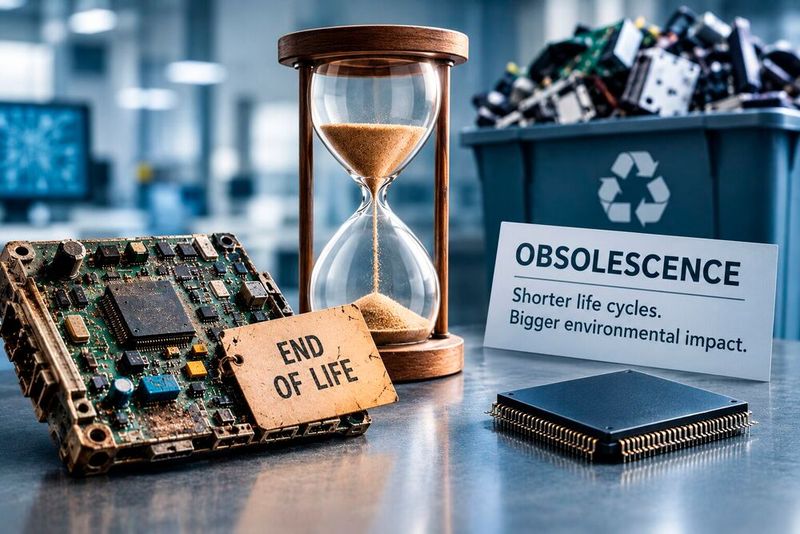
COGD Invites You to an International Obsolescence Forum Featuring a Panel Discussion and Seven Expert Presentations on November 10, starting at 11:00 a.m. at the "electronica stage" in Hall A5.
On November 10 at electronica 2026 in Munich: COGD Invites You to an International Obsolescence Forum Featuring a Panel Discussion and Expert Presentations.
(Bild: Dall-E / KI-generiert)
It is not only the memory chip market—which has been thrown completely out of whack within just a few months due to the current AI hype—that once again raises the general question of just how reliable supply chains, once believed to be secure, actually still are today.
While product discontinuations and allocation issues have always existed in the field of electronic components, when printed circuit board materials, auxiliary materials, software tools, and the like are increasingly available only on a limited basis or not at all, obsolescence can quickly become a serious economic threat—especially for manufacturers of durable goods.
The German industry association COGD (Component Obsolescence Group Deutschland) e.V. is intensively addressing the causes and consequences of obsolescence. With 168 member companies the association has been working together for 22 years now to develop pragmatic solutions to these ever-growing challenges.
According to COGD Chairman Axel Wagner, there have never been as many potential obsolescence risks as there are today. “Semiconductor manufacturers realigning their existing product and market strategies in record time to maximize profits, increasing geopolitical conflicts, rising tariffs, export and import restrictions, artificial shortages of raw materials, regulatory changes, and the massive increase in aggressive cyberattacks—this complex situation makes it increasingly difficult, yet also increasingly important, to closely scrutinize all potential risks to one’s own supply chain as early as possible.
To tackle this task reliably and sustainably, all areas of the company—from development to maintenance departments—must be involved in the process. It is therefore advisable to “establish a strategic obsolescence management system that covers all areas of the company,” says Wagner.
How to Protect against Obsolescence
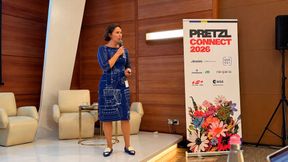
Interested exhibitors and visitors to electronica 2026 will learn how best to protect against obsolescence, what to consider when implementing an obsolescence management system in their own companies, and which tools are indispensable for efficient, proactive risk management on Tuesday, November 10, starting at 11:00 a.m., as part of the Obsolescence Forum 2026 organized by COGD in cooperation with Messe München.
The information event, taking place at the "electronica stage" in Hall A5, will open with a panel discussion featuring high-profile speakers. Tammy Max (Director of Parts Technical Content at Accuris), Björn Bartels (Managing Director of Amsys), Axel Wagner (Corporate Lawyer at Asteelflash and Chairman of the Board of COGD e.V.), Lars Kiera (Managing Director of RTS Electronic), Martin Linow (Resilience Part Manager Global Supply at Sick AG), and Wolfgang Heinbach (Managing Partner at Syliom Unternehmensberatung Dr. Heinbach, Steinleitner & Partner) will participate in a panel discussion moderated by Stefanie Kölbl (Director of TQ Embedded and Head of Obsolescence Management & Component Engineering), where they will address, among other topics, the growing influence of geopolitical developments on international electronics supply chains.
In addition, the experts on stage will provide attendees with valuable practical tips on how companies can identify and assess obsolescence risks early on. And what specific changes companies need to make so that obsolescence management becomes a proactive component of their overall risk management strategy. The discussion will address a wide range of important criteria, such as supply chain transparency, single-source versus second-source procurement, BOM analysis, data quality, PCNs/PDNs, and risk assessment, as well as responsibilities, collaboration between development, procurement, and management, and the integration of relevant processes.
Stand: 08.12.2025
Es ist für uns eine Selbstverständlichkeit, dass wir verantwortungsvoll mit Ihren personenbezogenen Daten umgehen. Sofern wir personenbezogene Daten von Ihnen erheben, verarbeiten wir diese unter Beachtung der geltenden Datenschutzvorschriften. Detaillierte Informationen finden Sie in unserer Datenschutzerklärung.
Einwilligung in die Verwendung von Daten zu Werbezwecken
Ich bin damit einverstanden, dass die Vogel Communications Group GmbH & Co. KG, Max-Planckstr. 7-9, 97082 Würzburg einschließlich aller mit ihr im Sinne der §§ 15 ff. AktG verbundenen Unternehmen (im weiteren: Vogel Communications Group) meine E-Mail-Adresse für die Zusendung von redaktionellen Newslettern nutzt. Auflistungen der jeweils zugehörigen Unternehmen können hier abgerufen werden.
Der Newsletterinhalt erstreckt sich dabei auf Produkte und Dienstleistungen aller zuvor genannten Unternehmen, darunter beispielsweise Fachzeitschriften und Fachbücher, Veranstaltungen und Messen sowie veranstaltungsbezogene Produkte und Dienstleistungen, Print- und Digital-Mediaangebote und Services wie weitere (redaktionelle) Newsletter, Gewinnspiele, Lead-Kampagnen, Marktforschung im Online- und Offline-Bereich, fachspezifische Webportale und E-Learning-Angebote. Wenn auch meine persönliche Telefonnummer erhoben wurde, darf diese für die Unterbreitung von Angeboten der vorgenannten Produkte und Dienstleistungen der vorgenannten Unternehmen und Marktforschung genutzt werden.
Meine Einwilligung umfasst zudem die Verarbeitung meiner E-Mail-Adresse und Telefonnummer für den Datenabgleich zu Marketingzwecken mit ausgewählten Werbepartnern wie z.B. LinkedIN, Google und Meta. Hierfür darf die Vogel Communications Group die genannten Daten gehasht an Werbepartner übermitteln, die diese Daten dann nutzen, um feststellen zu können, ob ich ebenfalls Mitglied auf den besagten Werbepartnerportalen bin. Die Vogel Communications Group nutzt diese Funktion zu Zwecken des Retargeting (Upselling, Crossselling und Kundenbindung), der Generierung von sog. Lookalike Audiences zur Neukundengewinnung und als Ausschlussgrundlage für laufende Werbekampagnen. Weitere Informationen kann ich dem Abschnitt „Datenabgleich zu Marketingzwecken“ in der Datenschutzerklärung entnehmen.
Falls ich im Internet auf Portalen der Vogel Communications Group einschließlich deren mit ihr im Sinne der §§ 15 ff. AktG verbundenen Unternehmen geschützte Inhalte abrufe, muss ich mich mit weiteren Daten für den Zugang zu diesen Inhalten registrieren. Im Gegenzug für diesen gebührenlosen Zugang zu redaktionellen Inhalten dürfen meine Daten im Sinne dieser Einwilligung für die hier genannten Zwecke verwendet werden. Dies gilt nicht für den Datenabgleich zu Marketingzwecken.
Recht auf Widerruf
Mir ist bewusst, dass ich diese Einwilligung jederzeit für die Zukunft widerrufen kann. Durch meinen Widerruf wird die Rechtmäßigkeit der aufgrund meiner Einwilligung bis zum Widerruf erfolgten Verarbeitung nicht berührt. Um meinen Widerruf zu erklären, kann ich als eine Möglichkeit das unter https://contact.vogel.de abrufbare Kontaktformular nutzen. Sofern ich einzelne von mir abonnierte Newsletter nicht mehr erhalten möchte, kann ich darüber hinaus auch den am Ende eines Newsletters eingebundenen Abmeldelink anklicken. Weitere Informationen zu meinem Widerrufsrecht und dessen Ausübung sowie zu den Folgen meines Widerrufs finde ich in der Datenschutzerklärung, Abschnitt Redaktionelle Newsletter.
Seven Technical Presentations
The seven technical presentations following the panel discussion will highlight practical solutions for a wide range of areas within active and proactive obsolescence management.
11:50 a.m.: Integrating Supply Chain Transparency into Obsolescence Management
The presentation by Martin Linow, Resilience Part Manager/Global Supply at Sick, highlights how improved transparency throughout the entire supply chain can enable the early detection of obsolescence risks and the implementation of effective countermeasures. A particular focus is placed on collaboration with suppliers and partners to optimize the flow of information through open communication and standardized interfaces. The presentation concludes with concrete recommendations on how companies can firmly establish transparency as an integral part of their obsolescence management to ensure long-term competitiveness even in volatile markets.
12:20 p.m.: Incorporating Obsolescence Management from the Start—Beginning with the Product Development Process
Obsolescence management begins with the initial product concept. Frank-Ralf Mayer, Business Development Manager at the Cicor Group specializing in Aerospace & Defense, Medical & Pharmaceutical, explains in his presentation how, with the right foresight, obsolescence risks can be reduced throughout the entire lifecycle of a device or system. Among other things, this involves the ability to proactively identify and categorize potential internal and external friction points across departments and then implement appropriate processes to help avoid costly surprises.
12:50 p.m.: Obsolescence and the Supply Chain
Engineers today face particular challenges when looking for alternative sources of supply for long-term projects. The presentation by Mark Shanley, Sales & Marketing Director at Astute Electronics, highlights how current market conditions are influenced by ever-shorter availability cycles as well as mergers and acquisitions among Original Component Manufacturers (OCMs), and how this affects decision-making processes. Effective supplier controls can help reduce risks from unreliable suppliers, while trusted partners play a critical role in navigating current supply chain challenges.
1:20 p.m.: Counterfeit Electronic Components in the Supply Chain: Risks and Advanced Detection Methods
Counterfeit electronic components may not meet the required specifications, which can lead to premature failures or vulnerabilities in mission-critical applications. Therefore, rigorous testing and inspection procedures are essential to identify such components and prevent their installation. The presentation by Holger Krumme, Managing Director of HTV Alter Technology, describes how the use of advanced electrical, physical, and materials-based analytical techniques can reliably verify the authenticity of electronic components and ensure compliance with industry standards.
1:50 p.m.: The Holistic Life Cycle Check-Up as an Introduction to obsolescence management—a case study.
Dr.-Ing. Roland Ruppel, Product Manager for Maintenance at WISAG Produktionsservice (WPS), presents a comprehensive obsolescence management concept with the “Life Cycle Check-Up”. For an aging, interlinked production line, this involved a holistic analysis that examined not only the electronic components but also the mechanical, pneumatic, and hydraulic components and their maintenance and monitoring. The results of this analysis show the effort and costs required to extend the service life by five years. The presentation also addresses the approach and possible prevention strategies.
2:20 p.m.: Sustaining Electronics Availability Through Rework and Modification in Modern Obsolescence Management
In his presentation, Lukas Fink, Sales Manager at HANZA BMK electronic services GmbH, uses practical examples from the fields of rework, modification, and refurbishment to demonstrate how existing electronic assemblies and systems can be sustainably maintained, modernized, and adapted to new requirements. These best-practice examples illustrate how companies can extend product lifecycles, reduce costs, conserve resources, and increase supply security for their customers through targeted measures.
2:50 p.m.: The most sustainable component is the one that already exists—how avoiding obsolescence combines sustainability and cost efficiency
Using a real-world case study—86,500 protected control units, zero field failures over 15 years, and 700,000 EUR in avoided redesign costs—to explain the interplay between obsolescence and configuration management, including CO2 projections and regulatory references to ESPR, CSRD, and LkSG. The presentation by Maximilian Krane, CEO of btv technologies, compares the three common options for component discontinuation-redesign, last-time-buy, and end-of-life production—in terms of cost, duration, and risk, and uses this analysis to determine which factors actually drive the decision in practice. Attendees will receive concrete decision-making criteria for determining when which obsolescence strategy is cost-effective, as well as a solid basis for arguments in their own ESG reporting.
"The best protection against obsolescence is still taking proactive action"
According to Axel Wagner, COGD aims to use the comprehensive and multifaceted program of the Obsolescence Forum 2026 once again to draw attention to the fact that, in these turbulent times, there is now a wide variety of options and measures available to effectively protect against obsolescence and its often costly consequences. Managers, buyers, developers, logistics specialists, and project managers simply need to make more intensive use of them. “After all, the best protection against obsolescence is still taking proactive action,” said the COGD chairman.
Those interested can find detailed information about the COGD’s Obsolescence Forum 2026 and the other activities of the nonprofit industry association on the association’s website.(kr)