AI data centers, e-mobility and energy storage are increasing voltage, power and pulse loads. Firstohm develops MELF and specialty resistors that must not only maintain their nominal resistance under these conditions, but also remain reliable over the long term.
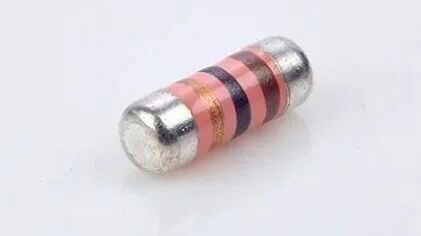
Surge-fester MELF-Widerstand aus der SRM-Serie von Firstohm. Die Baureihe ist für Anwendungen ausgelegt, in denen kurzzeitig hohe Energien und wiederholte Entladeimpulse auftreten können.
(Bild: Firstohm)
A resistor is usually not a component that engineers want to spend much time discussing. Resistance value, tolerance, power rating, package – select it, design it in, done. In many modern power systems, however, things are no longer quite that simple.
As voltage and power density increase, so does the stress on passive components. Add load changes, switching events, discharge pulses, temperature cycles and long operating lifetimes. A resistor then has to do more than maintain the correct value under steady-state conditions. What matters is what happens during a short, high-energy event – and whether its behavior changes after thousands of such events.
This becomes particularly clear in 800 V HVDC architectures for AI data centers. DC-link or bus capacitors can store considerable amounts of energy. After shutdown, the remaining voltage has to be discharged in a controlled way. The bleeder resistor therefore performs a task that looks small on the circuit diagram but is far from irrelevant to system safety.
Firstohm now addresses such applications specifically with surge-resistant MELF resistors. For the SRM301, for example, the company has carried out tests under repeated high-voltage discharge conditions.
For Firstohm, this is also part of a longer transition. The Taiwanese manufacturer has moved over several decades from more traditional electronics applications toward e-mobility, renewable energy, industrial power supplies and, more recently, AI infrastructure.
The change did not happen overnight. “It took about 30 years,” says S. Y. Lee, General Manager of Firstohm, whom we met in Taipei.
Resistance value alone tells less than it used to
Firstohm points to three developments that are putting particular pressure on resistors in modern power electronics: higher system voltages, higher power densities and more dynamic loads.
This increases the demands on pulse and surge capability. A resistor may handle its specified continuous power without any problem and still be damaged by a very short high-energy pulse. A component may also survive a single event but change over time when the same stress occurs repeatedly.
Firstohm therefore no longer sees resistors simply as components for controlling current or voltage. In power systems in particular, they increasingly become part of the protection and stability concept. Requirements include higher surge-energy capability, improved pulse handling, thermal stability and as little resistance drift as possible over long operating periods.
A data-sheet value therefore answers only part of the question. What matters is the actual stress the resistor will see in the specific circuit.
Real operation is harder on components than nominal conditions
Firstohm is seeing a shift toward a more application-driven approach to component selection. Customers are looking beyond nominal data-sheet values and evaluating load transients, surge events and thermal stress under real operating conditions.
System-level validation is therefore becoming more important. A resistor is not judged only by whether it meets its specification under defined laboratory conditions. What matters is how stable it remains in the actual application.
According to Firstohm, European customers in particular place high demands on long-term stability. High temperatures, humidity, thermal cycling and long operating lifetimes are among the conditions that are increasingly being considered. Customers also ask for proven reliability data in applications where a failure can affect more than just one function – for example in energy infrastructure or industrial equipment.
Resistance drift is part of this issue. A precision resistor is of little use if its initial value is accurate but moves too far over its lifetime under thermal and electrical stress.
Stand: 08.12.2025
Es ist für uns eine Selbstverständlichkeit, dass wir verantwortungsvoll mit Ihren personenbezogenen Daten umgehen. Sofern wir personenbezogene Daten von Ihnen erheben, verarbeiten wir diese unter Beachtung der geltenden Datenschutzvorschriften. Detaillierte Informationen finden Sie in unserer Datenschutzerklärung.
Einwilligung in die Verwendung von Daten zu Werbezwecken
Ich bin damit einverstanden, dass die Vogel Communications Group GmbH & Co. KG, Max-Planckstr. 7-9, 97082 Würzburg einschließlich aller mit ihr im Sinne der §§ 15 ff. AktG verbundenen Unternehmen (im weiteren: Vogel Communications Group) meine E-Mail-Adresse für die Zusendung von redaktionellen Newslettern nutzt. Auflistungen der jeweils zugehörigen Unternehmen können hier abgerufen werden.
Der Newsletterinhalt erstreckt sich dabei auf Produkte und Dienstleistungen aller zuvor genannten Unternehmen, darunter beispielsweise Fachzeitschriften und Fachbücher, Veranstaltungen und Messen sowie veranstaltungsbezogene Produkte und Dienstleistungen, Print- und Digital-Mediaangebote und Services wie weitere (redaktionelle) Newsletter, Gewinnspiele, Lead-Kampagnen, Marktforschung im Online- und Offline-Bereich, fachspezifische Webportale und E-Learning-Angebote. Wenn auch meine persönliche Telefonnummer erhoben wurde, darf diese für die Unterbreitung von Angeboten der vorgenannten Produkte und Dienstleistungen der vorgenannten Unternehmen und Marktforschung genutzt werden.
Meine Einwilligung umfasst zudem die Verarbeitung meiner E-Mail-Adresse und Telefonnummer für den Datenabgleich zu Marketingzwecken mit ausgewählten Werbepartnern wie z.B. LinkedIN, Google und Meta. Hierfür darf die Vogel Communications Group die genannten Daten gehasht an Werbepartner übermitteln, die diese Daten dann nutzen, um feststellen zu können, ob ich ebenfalls Mitglied auf den besagten Werbepartnerportalen bin. Die Vogel Communications Group nutzt diese Funktion zu Zwecken des Retargeting (Upselling, Crossselling und Kundenbindung), der Generierung von sog. Lookalike Audiences zur Neukundengewinnung und als Ausschlussgrundlage für laufende Werbekampagnen. Weitere Informationen kann ich dem Abschnitt „Datenabgleich zu Marketingzwecken“ in der Datenschutzerklärung entnehmen.
Falls ich im Internet auf Portalen der Vogel Communications Group einschließlich deren mit ihr im Sinne der §§ 15 ff. AktG verbundenen Unternehmen geschützte Inhalte abrufe, muss ich mich mit weiteren Daten für den Zugang zu diesen Inhalten registrieren. Im Gegenzug für diesen gebührenlosen Zugang zu redaktionellen Inhalten dürfen meine Daten im Sinne dieser Einwilligung für die hier genannten Zwecke verwendet werden. Dies gilt nicht für den Datenabgleich zu Marketingzwecken.
Recht auf Widerruf
Mir ist bewusst, dass ich diese Einwilligung jederzeit für die Zukunft widerrufen kann. Durch meinen Widerruf wird die Rechtmäßigkeit der aufgrund meiner Einwilligung bis zum Widerruf erfolgten Verarbeitung nicht berührt. Um meinen Widerruf zu erklären, kann ich als eine Möglichkeit das unter https://contact.vogel.de abrufbare Kontaktformular nutzen. Sofern ich einzelne von mir abonnierte Newsletter nicht mehr erhalten möchte, kann ich darüber hinaus auch den am Ende eines Newsletters eingebundenen Abmeldelink anklicken. Weitere Informationen zu meinem Widerrufsrecht und dessen Ausübung sowie zu den Folgen meines Widerrufs finde ich in der Datenschutzerklärung, Abschnitt Redaktionelle Newsletter.
Reliability is therefore not simply a question of whether a component fails or continues to operate. There is a large area in between where the component still works, but gradually moves away from its original characteristics.
MELF is not new – but it still fits new applicationsn
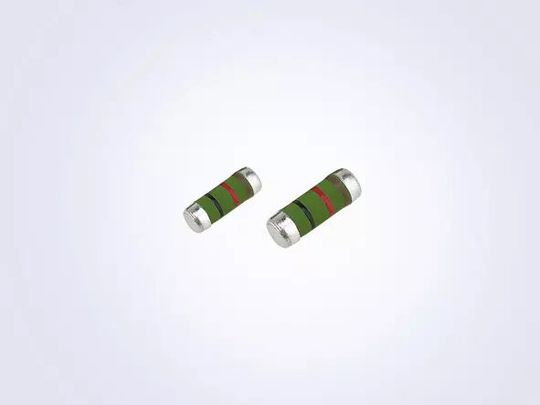
Wirewound MELF resistors from Firstohm’s SWM series. They are designed for high pulse and inrush-current loads and are offered for applications including e-mobility and energy storage.
(Bild: Firstohm)
Firstohm has been working with MELF resistors for decades. The company was founded in 1969 and, according to its own information, is one of the manufacturers offering custom thin-film MELF resistors.
MELF stands for Metal Electrode Leadless Face. Unlike the familiar rectangular chip resistor, a MELF resistor has a cylindrical body with metallized ends while still being suitable for automated SMD assembly.
MELF itself is not new. But some of the characteristics of the package fit requirements that are becoming more important again.
Firstohm uses wire-wound MELF structures, among other technologies, where high surge capability is required. In the SWM series, for example, resistance wire is wound around a ceramic body. The design is intended for high pulse and inrush-current loads and is used in applications including electric vehicles and energy storage.
That does not mean MELF is automatically the better resistor. Different applications need different technologies. But where pulse energy, thermal stress, vibration and long-term stability come together, the mechanical and thermal design of the component can matter.
For components that attract little attention during normal operation, suitability is often decided by what happens outside normal operation.
AI is creating a load requirement that barely existed a few years ago
One of Lee’s comments about current AI demand is particularly telling. Two or three years ago, Firstohm did not see today’s level of demand for high voltage and high power in this field.
That has changed.
“Recently, we have seen increasing demand for high power and 800 V HVDC,” Lee says. Firstohm connects this development with higher power density, higher voltages and the resulting need for greater surge capability.
A practical example is the bleeder or discharge resistor in HVDC architectures. Bus capacitors have to be discharged to a safe voltage level within a defined period after shutdown. During this process, the resistor has to absorb a large amount of energy for a short time.
For the SRM301, Firstohm describes a test using 800 V DC and a capacitance of 60 µF. After repeated charge and discharge cycles, the documented resistance change was 0.035 percent. The company lists AI servers, power modules, DC-link discharge circuits, energy storage and battery backup units as possible applications.
Another BBU application published by Firstohm goes further. Here, an SRM301 configuration was tested under real customer conditions with repeated discharge events. The individual number is less important than the direction behind it. The resistor must not maintain its characteristics only during the first pulse. It has to do so again and again.
Renewable energy and e-mobility raise similar questions
AI is a new growth driver, but it is not the only one. In our conversation, Firstohm identified renewable energy as an important current source of demand. Other areas include smart meters, electric vehicles, industrial power supplies, photovoltaic inverters and energy storage systems.
The applications are very different. Some of the stresses are less so.
An inverter operates under different conditions from an AI server. An electric vehicle has its own environmental and lifetime requirements. But similar questions keep coming up: How does the resistor behave during rapid load changes? How much pulse energy must it withstand? And will its resistance remain within the required limits after years of operation?
This also explains why Firstohm is not focusing its development solely on precision. Precision remains part of the portfolio, but surge capability, higher power and thermal performance are becoming more important. Since our previous discussion for electronica in 2024, the company has further developed its surge-resistant SRM and SWM series and expanded its testing capabilities for high-energy pulse and surge conditions. At the same time, Firstohm is expanding solutions for energy storage, PV inverters, charging infrastructure and HVDC power systems.
Higher reliability also means more testing
This leads to a rather straightforward consequence: if a manufacturer wants to make claims about real operating stresses, it has to be able to test them. That means additional testing with pulses, surge events, thermal cycles and repeated load conditions. Firstohm expects the market to continue moving toward higher power density, higher system voltages and more severe transient loads over the coming years. At the same time, resistors are expected to become smaller and maintain stable resistance values over long operating lifetimes.
Some of these requirements work against each other.
It is easier to distribute higher pulse energy across a larger component. More surface area helps with heat dissipation. At the same time, engineers want to save exactly that space. There is no free route to higher power density for resistors either.
The AI boom is now reaching lead times as well
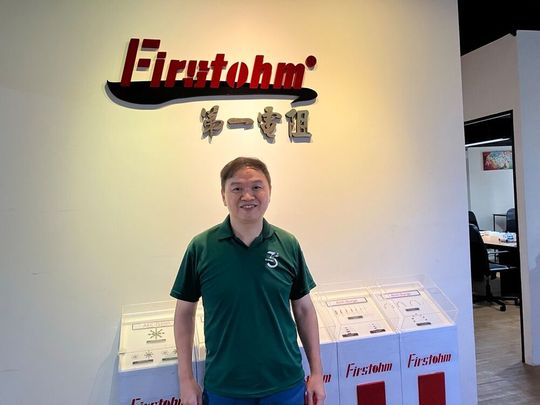
S. Y. Lee, General Manager of Firstohm, at the company’s site in Taiwan. Firstohm develops MELF and specialty resistors for applications involving high voltages, pulse energy and long operating lifetimes.
(Bild: VCG)
The change in the market is not visible only in development requests. Firstohm also reports longer lead times.
According to Lee, the company’s typical lead time used to be four to six weeks. It is now closer to eight to ten weeks. Firstohm says it has also observed lead times of more than 20 weeks at a major competitor.
That is not enough to conclude that there is a general resistor shortage. The market is too broad, and the statement of a single manufacturer is too limited for that.
But it does show that increasing demand for specialized passive components is having an effect. AI infrastructure does not consist only of GPUs, memory, capacitors and power semiconductors. Around these highly visible components is a large number of less noticeable parts whose requirements are also increasing.
Some of them cannot simply be replaced by any available alternative.
What happens outside normal operation determines the resistor
Resistors remain simple components – at least on the circuit diagram. Their function does not suddenly become complicated because data centers are being built or vehicles are moving to higher voltage levels.
The operating conditions do.
800 V, high pulse energy, rapid load changes and limited space do not change Ohm’s law. But they do change which resistor will survive an application and how long its characteristics will remain stable.
That is why looking only at rated power and resistance value is becoming less useful. Engineers need to know what happens between the normal operating points: during startup, shutdown, a surge event or after thousands of thermal and load cycles.
The resistor is still one of the smaller components in the system. But whether it is suitable increasingly depends on the moments when the system is not operating under normal conditions. (sb)




:quality(80)/p7i.vogel.de/wcms/5d/6c/5d6c9ac22e9b71658e23b7245d039209/0133286382v2.jpeg "Das IBM Quantum Systems Two zählt derzeit zu den fortschrittlichsten Quantencomputern der Welt. (Bild: IBM)")
:quality(80)/p7i.vogel.de/wcms/24/83/24831e0229a88c581c3320be3b97f9f3/0133276519v2.jpeg "Neuartige Van-der-Wals-Magnete könnten bei zukünftigen Speichertechnologien enorme Energieeinsparung ermöglichen - zumindest in der Theorie. (Bild: University of Edinburgh, mit KI generiert)")
:quality(80)/p7i.vogel.de/wcms/61/a6/61a663ace51e7f5ae615c33174eab258/0133230109v2.jpeg "Prototyp des Diamant-Spin-Quantencomputers: Nutzende können ihn auch ohne zusätzliche Spezialkenntnisse mithilfe der Fujitsu Hybrid Quantum Computing Platform einsetzen. (Bild: Fujitsu)")
:quality(80)/p7i.vogel.de/wcms/98/76/987603a239a09b71440a5ef193cc29de/0133240160v2.jpeg "Surge-resistant MELF resistor from Firstohm’s SRM series. The series is designed for applications in which high-energy pulses and repeated discharge events can occur. (Bild: Firstohm)")
:quality(80)/p7i.vogel.de/wcms/90/15/90156e45a5b80d79683b627c41ec6603/0133277411v2.jpeg "LED-Treiber: LED-Platinen verbinden Leuchte und Elektronik. Bei der Auslegung müssen Betriebsstrom, Durchlassspannung und Temperatur über den gesamten Arbeitsbereich berücksichtigt werden. (Bild: © Maria - stock.adobe.com)")
:quality(80)/p7i.vogel.de/wcms/8a/bc/8abc94b512ad123853ef94eaec0c8705/0133283570v2.jpeg "Vom Core zur Plattform: Mit MIPS, ARC und RISC-V verschiebt sich der Wettbewerb von einzelnen Prozessor-IP-Blöcken hin zu integrierten Compute-Plattformen für spezialisierte Anwendungen. (Bild: Dall-E / KI-generiert)")
:quality(80)/p7i.vogel.de/wcms/55/4a/554ae759b37bf6f75ae0a015b8ab1534/0133183641v2.jpeg "Edge-AI-Security: Je autonomer KI-Systeme am Netzrand agieren, desto wichtiger wird eine durchgängige Vertrauenskette – vom sicheren Boot bis zum geschützten Modell. (Bild: NXP)")
:quality(80)/p7i.vogel.de/wcms/63/9f/639fcf9a3405afeb5b40ff010966d74b/0133127211v2.jpeg "Einheitliche Schnittstelle: Mit dem Model Hardware Standard will Anthropic erreichen, dass KI-Agenten programmierbare Laborgeräte und Roboterarme über eine einheitliche Treiberschicht ansprechen können. (Bild: Dall-E / KI-generiert)")
:quality(80)/p7i.vogel.de/wcms/da/1b/da1bc353f79ddc2b27c44c100b715c99/0133127761v2.jpeg "(Bild: Innodisk)")
:quality(80)/p7i.vogel.de/wcms/1e/4d/1e4d08bab448dd50ef09a4821453a80a/0133206903v2.jpeg "Taschen-Rechner: Der Sharp Pocket Computer PC-1211 maß 175 x 70 x 17 mm und war der erste programmierbare Rechner, der wirklich „mobil“ war - wenn auch nicht leistungsstark. (Bild: Pocket computer pc1211 / Yaghsi / CC BY 3.0 / Wikimedia Commons)")
:quality(80)/p7i.vogel.de/wcms/7f/2f/7f2f8fdc44bb9a8eb10c91d4ed89950f/0132825173v2.jpeg "Immer im Überblick: Das volle Programm des ESE Kongress 2026 mit über 100 Beiträgen - Keynotes, Vorträge und Seminare - ist nun auf www.ese-kongress.de online. (Bild: Elisabeth Wiesner)")
:quality(80)/p7i.vogel.de/wcms/49/42/49425ede9dedff9cab1c3c865cee2818/0133283111v3.jpeg "Halbautomatische Fertigungslinie für industrienahe Pouch-Zellen im Trockenraum des Fraunhofer ISE im Zentrum für Elektrische Energiespeicher. (Bild: Fraunhofer ISE)")
:quality(80)/p7i.vogel.de/wcms/bd/5d/bd5dc28a189b4e55021afe8d02c2f9fe/0133277606v2.jpeg "Parallele
Strompfade:
Zwei geregelte Wandlerzweige teilen den Eingangsstrom und stabilisieren die Ausgangsspannung trotz Schwankungen im 28-V-Bordnetz. (Bild: SYKO Leistungselektronik GmbH)")
:quality(80)/p7i.vogel.de/wcms/3d/67/3d6777d7a99bdf88f86798cd73451538/0133004756v2.jpeg "Die AGI-CPU von Arm wurde im März 2026 angekündigt. Im Rahmen der Hot Chips 2026 sind die Entwickler ins Detail gegangen. (Bild: Arm)")
:quality(80)/p7i.vogel.de/wcms/8a/2e/8a2e7d2a89ffe55c545dd6c831ed154e/0132246788v2.jpeg "Über 500 Teilnehmer, 120 Referenten: Die FPGA Conference Europe platzte in diesem Jahr aus allen Nähten – und wurde ihrem Anspruch als Leitkongress der FPGA-Welt einmal mehr gerecht. (Bild: Tobi Giessen)")
:quality(80)/p7i.vogel.de/wcms/06/a1/06a158e32b18d99fcea65547cec5d4c7/0132069489v2.jpeg "Mit direkter Integration von Speicher ins Chip-Package verspricht AMD mit dem Versal Premium Gen 2 SoC eine schnellere Datenübertragung, verringerte Latenz und einem potentiell geringere Stromverbrauch. (Bild: AMD)")
:quality(80)/p7i.vogel.de/wcms/86/2a/862afb1de8423bb7401098a2fd268281/0131792672v2.jpeg "Bild 1: Ein Spannungsversorgungskonzept für Lasten, welche eine vorgegebene Ein- und Abschaltreihenfolge (Sequencing) benötigen. (Bild: ADI)")
:quality(80)/p7i.vogel.de/wcms/cf/1e/cf1e926f1d2804e93405c9376150827e/0133282287v3.jpeg "ZF Aftermarket wendet seine „Maintain-Repair-Replace“-Strategie mit neuen Reparaturoptionen auf den elektrifizierten Antriebsstrang an. (Bild: ZF Friedrichshafen AG)")
:quality(80)/p7i.vogel.de/wcms/fe/e1/fee1edab3478d41bce8ff2132743265d/0133286893v2.jpeg "Schematische Darstellung einer hochlagigen ATE-Testleiterplatte: Sie verbindet das Testsystem mit dem Prüfling und führt zahlreiche Signal-, Versorgungs- und Masseverbindungen auf engem Raum zusammen. (Bild: Dall-E / KI-generiert)")
:quality(80)/p7i.vogel.de/wcms/51/40/5140d067af7ad6f7bafade1fd9e893d0/0133202754v2.jpeg "Yokogawa erweitert seine CTS-Serie um die aufklappbaren AC/DC-Stromsensoren CT500SA und CT200SA. Die Sensoren messen bis 500 A beziehungsweise 200 A und erreichen Bandbreiten bis 500 kHz oder 1 MHz. (Bild: Yokogawa)")
:quality(80)/p7i.vogel.de/wcms/4e/9f/4e9fdabefc243effcbc732982d6c6044/0133184134v2.jpeg "5G-Netzwerke und Endgeräte müssen Steuerinformationen regelmäßig überwachen. Die 3GPP-Release-17-Funktion SSSG soll diesen Aufwand reduzieren (Symbolbild). (Bild: frei lizenziert)")
:quality(80)/p7i.vogel.de/wcms/52/9b/529b7bc41f8c6f43d6ef52d93fa7523e/0133110886v2.jpeg "Ein Mitarbeiter von NMi Testlab entnimmt eine elektrische Baugruppe aus einer thermischen Prüfkammer. Der Hitzeschutzanzug schützt ihn beim Umgang mit dem Prüfling unter hohen Temperaturen. (Bild: NMI Testlab)")
:quality(80)/p7i.vogel.de/wcms/45/32/45329f4e0d2749bcf0adebfc89eff3a4/0133165310v2.jpeg "Messtechnik gehört zur Validierung elektronischer Systeme. Bei schnellen Datenschnittstellen prüfen Entwickler unter anderem Signalqualität, Jitter und Übertragungsverluste. (Bild: frei lizenziert)")
:quality(80)/p7i.vogel.de/wcms/55/b7/55b787e27f743c116c09aaa9fa2d0420/0133297650v2.jpeg "(Bild: Mesago Messe Frankfurt GmbH / Arturo Rivas)")
:quality(80)/p7i.vogel.de/wcms/45/74/4574b3ee44493c0e06e817a44745d3d4/0133211591v2.jpeg "Die beiden CEOs der Unternehmen: Max Mauri von Seco und David Reger von Neura. (Bild: Neura Robotics)")
:quality(80)/p7i.vogel.de/wcms/b2/52/b252e5d19835cf613cbb33b269e419d2/0133146752v2.jpeg "Open System Protocol: Das Konzept eines Fahrzeuginnenraums mit verteilter, dynamischer RGB-Beleuchtung. (Bild: AMS Osram)")
:quality(80)/p7i.vogel.de/wcms/c8/f1/c8f15752e93e74fd5db0de6cced20370/0133320070v2.jpeg "He Tingbo bei der erstmaligen Vorstellung des Tau-Prinzips von Huawei. (Bild: Huawei)")
:quality(80)/p7i.vogel.de/wcms/c0/0d/c00d9f9b583b33e743a59fb228da70a2/0133273846v2.jpeg "Beim Fan-out Panel-Level Packaging (rechts) werden die vereinzelten Dies statt auf einem runden Wafer auf einem rechteckigen Panel angeordnet und anschließend gemeinsam weiterverarbeitet. Gegenüber dem waferbasierten Fan-out (links) lässt sich die verfügbare Fläche dadurch effizienter nutzen und eine größere Zahl von Packages parallel fertigen. (Bild: Dall-E / KI-generiert)")
:quality(80)/p7i.vogel.de/wcms/91/4f/914fb6dd9b6daa80859dee7907b1be03/0133286316v2.jpeg "Mega-Deal: Qualcomm liefert für 60 Milliarden US-Dollar künftig maßgeschneiderte Inferenz-Chips und optische Verbindungstechnik für die Cloud-Infrastruktur von Amazon. (Bild: Qualcomm)")
:quality(80)/p7i.vogel.de/wcms/4e/c6/4ec6a7f0a3480f96bf9e12eb1e9e73f6/0133276123v2.jpeg "Der frühere Orient-/Ostmittelmeer-Korridor verbindet Mittel- und Südosteuropa und führt unter anderem durch Rumänien. Dort verläuft die Bahnstrecke von der ungarischen bis zur bulgarischen Grenze über Arad, Timișoara und Craiova. (Bild: Dall-E / KI-generiert)")
:quality(80)/p7i.vogel.de/wcms/6b/1d/6b1dde86fdb120b4cf9b8bc8573c415a/0133056789v3.jpeg "Wir bezahlen für Systeme, die menschliche Arbeit übernehmen, ohne bislang geklärt zu haben, wie die dadurch entstehende Wertschöpfung künftig verteilt werden soll. (Bild: frei lizenziert)")
:quality(80)/p7i.vogel.de/wcms/47/20/47201c1ce3692dbdb4e7e62709de4e16/0132649717v3.jpeg "Ingenieurberufe verändern sich: Neben der aktuellen Konjunktur treiben Digitalisierung, KI und neue Technologien den Bedarf an kontinuierlicher Qualifizierung. (Bild: frei lizenziert)")
:quality(80)/p7i.vogel.de/wcms/4e/41/4e4159d1e93e67d47bd2f51a90691b23/0131548978v2.jpeg "Transformation im Engineering: KI-gestützte Systeme generieren zunehmend selbstständig Schaltschranklayouts und entlasten Konstrukteure von zeitraubenden Routineaufgaben. (Bild: WSCAD)")
:fill(fff,0)/p7i.vogel.de/companies/67/8a/678a0c5c3e273/logo-caltest-instruments-signet.png "logo-caltest-instruments-signet (Caltest Instruments GmbH)")
:quality(80)/p7i.vogel.de/wcms/72/45/7245dc0f6ac41ac6bcf86d8e5d761c15/0132780694v3.jpeg "AI chip size is increasing, requiring a larger power circuit area while keeping the overall board size as small as possible. (Bild: TAIYO YUDEN)")
:quality(80)/p7i.vogel.de/wcms/ab/73/ab73d241611c109a242a4e5f1b50d01e/0128483827v4.jpeg "Filter elements in various SMD designs. (Bild: TAIYO YUDEN)")