Siemens plans to acquire German software specialist Lauterbach. The transaction aims to combine hardware verification and software debugging to accelerate the development of complex semiconductors.
Lauterbach announced that it has agreed to be acquired by Siemens. This marks a new era of "Enabling Embedded Innovations", with customer value created from early chip design to system verification.
(Bild: Siemens)
Siemens signed an agreement on November 10, 2026, to acquire German company Lauterbach. The specialist in debug and trace technologies for embedded software is expected to strengthen Siemens' Electronic Design Automation (EDA) portfolio. The acquisition aims to integrate hardware-assisted verification with embedded software analysis and debugging into a unified development workflow. Siemens intends to simplify the development and verification of complex semiconductor devices while accelerating the time to market for new products.
Lauterbach was founded in 1979 by brothers Lothar and Stephan Lauterbach and is headquartered near Munich, Germany. The company employs approximately 170 people and serves more than 1,200 customers worldwide, particularly in the automotive, semiconductor and telecommunications industries. In 2025, Lauterbach generated revenue of approximately €60 million. The planned acquisition will give Siemens access to specialized technologies and an established international customer base.
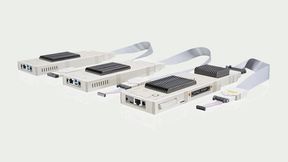
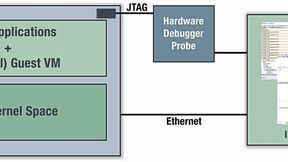
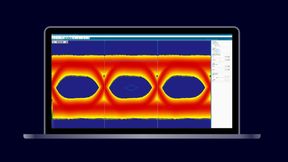
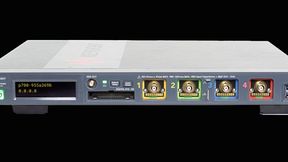
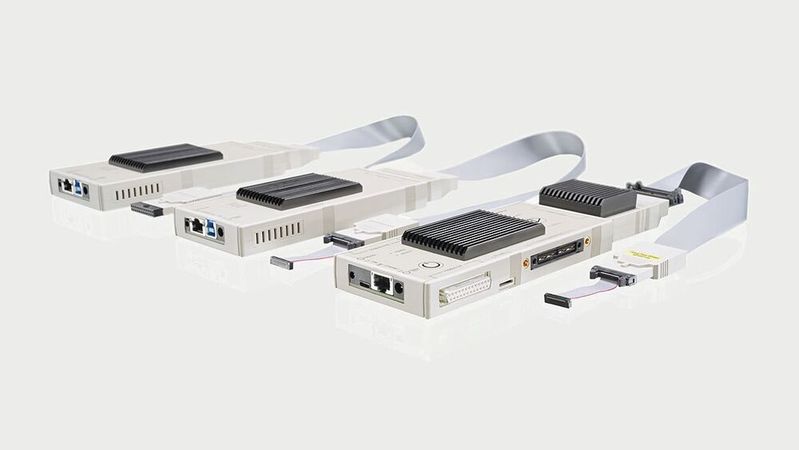
The company's flagship product is the TRACE32 development platform, which enables engineers to monitor embedded software execution, trace program operations in real time and analyze software errors. The tools are used throughout the development lifecycle of system-on-chip (SoC) architectures. They support a wide range of processor architectures and are deployed in the development of individual microprocessors as well as complex systems featuring multiple processing cores.
Earlier Detection of Hardware and Software Issues
By combining TRACE32 with Siemens' hardware-assisted verification solutions, developers will gain a unified view of hardware and software interactions. This capability is becoming increasingly important as modern semiconductors integrate multiple processor cores, AI accelerators and specialized functional units. Errors can arise not only within individual components but also from interactions between them. A continuous verification workflow is intended to help engineers identify these issues at earlier stages of development.
A central element of the strategy is the so-called shift-left approach, which moves development and testing activities to earlier stages of the engineering process. This allows embedded software to be written, executed and verified before physical silicon becomes available. Identifying errors earlier can reduce costly redesign cycles, improve the use of engineering resources and shorten development timelines. Siemens expects significant productivity benefits, particularly for complex AI processors and high-performance computing systems.
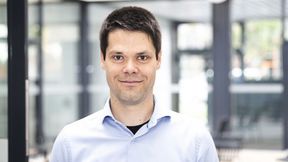
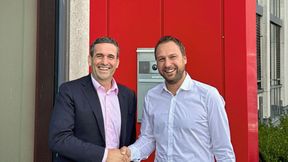
"With Lauterbach, we are further extending our industry-leading EDA portfolio for semiconductor design by bringing together our premier hardware-assisted verification portfolio with its industry-leading software debugging technologies," said Cedrik Neike, Member of the Managing Board of Siemens AG and President Digital Industries. He emphasized that semiconductors represent a core segment of Siemens' technology strategy. Stephan Lauterbach, co-founder and Chief Technology Officer of Lauterbach, also highlighted the growing importance of closer integration between hardware and software development.
Siemens to Strengthen Its Position in the EDA Market
The planned acquisition forms part of Siemens' long-term strategy to expand its position in the global electronic design automation market. The company's acquisition of Mentor Graphics for approximately US$4.5 billion in 2017 significantly strengthened its presence in this sector. Siemens has since expanded its portfolio through further acquisitions. In July 2026, the company also agreed to acquire Defacto Technologies and Precision Innovations. By broadening its capabilities, Siemens is intensifying competition with established US-based EDA providers Synopsys and Cadence Design Systems.
The combined technologies are intended for companies operating across a wide range of industries, including AI hardware, high-performance computing, software-defined vehicles, telecommunications, industrial automation, aerospace and defense. Increasing requirements for cybersecurity and functional safety are also driving demand for integrated verification solutions. In the longer term, Siemens aims to establish a continuous verification process extending from early chip design to validation of the finished system.
Stand: 08.12.2025
Es ist für uns eine Selbstverständlichkeit, dass wir verantwortungsvoll mit Ihren personenbezogenen Daten umgehen. Sofern wir personenbezogene Daten von Ihnen erheben, verarbeiten wir diese unter Beachtung der geltenden Datenschutzvorschriften. Detaillierte Informationen finden Sie in unserer Datenschutzerklärung.
Einwilligung in die Verwendung von Daten zu Werbezwecken
Ich bin damit einverstanden, dass die Vogel Communications Group GmbH & Co. KG, Max-Planckstr. 7-9, 97082 Würzburg einschließlich aller mit ihr im Sinne der §§ 15 ff. AktG verbundenen Unternehmen (im weiteren: Vogel Communications Group) meine E-Mail-Adresse für die Zusendung von redaktionellen Newslettern nutzt. Auflistungen der jeweils zugehörigen Unternehmen können hier abgerufen werden.
Der Newsletterinhalt erstreckt sich dabei auf Produkte und Dienstleistungen aller zuvor genannten Unternehmen, darunter beispielsweise Fachzeitschriften und Fachbücher, Veranstaltungen und Messen sowie veranstaltungsbezogene Produkte und Dienstleistungen, Print- und Digital-Mediaangebote und Services wie weitere (redaktionelle) Newsletter, Gewinnspiele, Lead-Kampagnen, Marktforschung im Online- und Offline-Bereich, fachspezifische Webportale und E-Learning-Angebote. Wenn auch meine persönliche Telefonnummer erhoben wurde, darf diese für die Unterbreitung von Angeboten der vorgenannten Produkte und Dienstleistungen der vorgenannten Unternehmen und Marktforschung genutzt werden.
Meine Einwilligung umfasst zudem die Verarbeitung meiner E-Mail-Adresse und Telefonnummer für den Datenabgleich zu Marketingzwecken mit ausgewählten Werbepartnern wie z.B. LinkedIN, Google und Meta. Hierfür darf die Vogel Communications Group die genannten Daten gehasht an Werbepartner übermitteln, die diese Daten dann nutzen, um feststellen zu können, ob ich ebenfalls Mitglied auf den besagten Werbepartnerportalen bin. Die Vogel Communications Group nutzt diese Funktion zu Zwecken des Retargeting (Upselling, Crossselling und Kundenbindung), der Generierung von sog. Lookalike Audiences zur Neukundengewinnung und als Ausschlussgrundlage für laufende Werbekampagnen. Weitere Informationen kann ich dem Abschnitt „Datenabgleich zu Marketingzwecken“ in der Datenschutzerklärung entnehmen.
Falls ich im Internet auf Portalen der Vogel Communications Group einschließlich deren mit ihr im Sinne der §§ 15 ff. AktG verbundenen Unternehmen geschützte Inhalte abrufe, muss ich mich mit weiteren Daten für den Zugang zu diesen Inhalten registrieren. Im Gegenzug für diesen gebührenlosen Zugang zu redaktionellen Inhalten dürfen meine Daten im Sinne dieser Einwilligung für die hier genannten Zwecke verwendet werden. Dies gilt nicht für den Datenabgleich zu Marketingzwecken.
Recht auf Widerruf
Mir ist bewusst, dass ich diese Einwilligung jederzeit für die Zukunft widerrufen kann. Durch meinen Widerruf wird die Rechtmäßigkeit der aufgrund meiner Einwilligung bis zum Widerruf erfolgten Verarbeitung nicht berührt. Um meinen Widerruf zu erklären, kann ich als eine Möglichkeit das unter https://contact.vogel.de abrufbare Kontaktformular nutzen. Sofern ich einzelne von mir abonnierte Newsletter nicht mehr erhalten möchte, kann ich darüber hinaus auch den am Ende eines Newsletters eingebundenen Abmeldelink anklicken. Weitere Informationen zu meinem Widerrufsrecht und dessen Ausübung sowie zu den Folgen meines Widerrufs finde ich in der Datenschutzerklärung, Abschnitt Redaktionelle Newsletter.
Following completion of the acquisition, Stephan Lauterbach and Thomas Ullmann are expected to continue their work within Siemens. Lauterbach's existing products, support for different processor architectures and technical customer services are expected to remain unchanged. Siemens anticipates that its global presence will create additional opportunities to introduce Lauterbach's solutions to new markets and expand its customer base. The transaction is expected to close in the first half of 2027, subject to customary closing conditions and required regulatory approvals. The companies have agreed not to disclose the financial terms of the acquisition.(sg)