Quantum computing could put established encryption methods at risk. Infineon examines how secure elements and PQC-enabled microcontrollers can protect embedded systems against future threats—and why the transition requires more than new cryptographic algorithms.
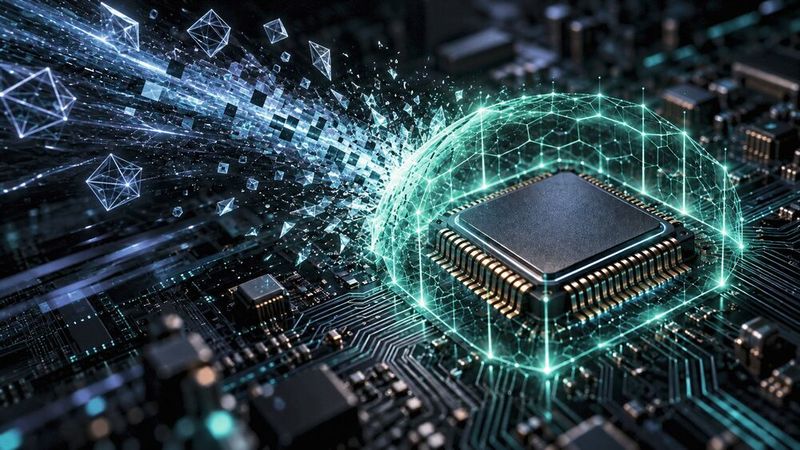
Quantum Security: Post-quantum cryptography helps protect embedded systems against future quantum threats. Hardware-based security provides the foundation for quantum-resistant applications.
(Source: Dall-E / KI-generiert)
As quantum computing advances, modern cybersecurity faces significant challenges: ongoing real-world attacks such as ransomware, phishing, and supply chain compromises, and a long-term structural threat posed by quantum computers. While today’s cryptographic systems are designed to protect against attacks using classical computers, future quantum capabilities require a fundamental reassessment of digital trust. Post-quantum cryptography (PQC) addresses this shift by enabling secured communication and authentication in a post-quantum world.
Quantum Computing and the Cryptographic Risk
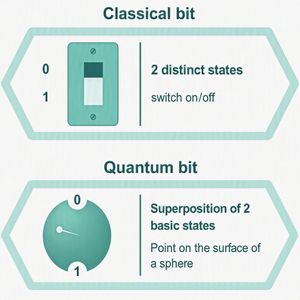
Conventional computers process information in bits, either 1 or 0. Quantum computers use qubits, which, through superposition can represent both states at once, enabling new computing paradigms (Fig. 1). At the same time, cryptographically relevant quantum computers (CRQCs) could break widely used public-key algorithms such as RSA and ECC, undermining today’s digital trust infrastructure.
Bildergalerie
Even before CRQCs exist, organizations face the risk of “harvest now, decrypt later” attacks, where encrypted data is stored today and decrypted once sufficient quantum capabilities become available. This threatens sensitive information and critical infrastructure, including financial systems, healthcare networks, and energy grids.
The Rise of Post-Quantum Cryptography
To address these risks, the cybersecurity industry is actively preparing for the transition to post-quantum cryptography. This refers to cryptographic algorithms that are resistant to both classical and quantum attacks and are intended to replace or supplement existing cryptographic systems without disrupting global communication infrastructure.
Standardization efforts led by the National Institute of Standards and Technology (NIST) provide an important basis for long-term PQC deployment. The most relevant standardized and selected algorithms include ML-KEM for key encapsulation, ML-DSA and FN-DSA for digital signatures, and SLH-DSA as a hash-based alternative.
In embedded systems, limited RAM, flash memory, CPU performance, and communication bandwidth strongly influence PQC algorithm selection. Compared to ECC, post-quantum algorithms typically require larger keys, signatures, and certificates, which increases memory, processing, and bandwidth demands. Migration to PQC is therefore a system-level engineering challenge that affects hardware selection, software architecture, and overall security design, not just a cryptographic update.
Security Architectures for PQC Systems
To address these challenges, dedicated hardware-based security architectures are becoming increasingly important for enabling efficient PQC deployment. Security controllers and PQC-enabled microcontrollers represent two complementary approaches for implementing PQC in embedded systems, each offering different advantages depending on application requirements.
Security controllers and Secure Elements
Secure Elements (SE) are dedicated security components designed for environments with severe constraints and high security requirements. They typically operate under strict limitations in terms of memory, communication bandwidth, and computational power, while providing strong protection against physical and side-channel attacks.
Infineon’s OPTIGA TPM is an embedded security solution that integrates post-quantum cryptography to help protect connected devices against future attacks by quantum computers, including firmware updates and root-of-trust authentication.
Such devices are widely used in applications ranging from industrial IoT and consumer devices to payment systems, identification solutions, and automotive Digital Key and secured vehicle access systems. This is particularly relevant for automotive applications such as Car Access and Digital Key ecosystems, where digital credentials can be provisioned, shared, and managed across multiple users and devices. Strong authentication and protected key storage are essential to allow access rights to be granted, transferred, and revoked while preventing unauthorized access.
Stand: 08.12.2025
Es ist für uns eine Selbstverständlichkeit, dass wir verantwortungsvoll mit Ihren personenbezogenen Daten umgehen. Sofern wir personenbezogene Daten von Ihnen erheben, verarbeiten wir diese unter Beachtung der geltenden Datenschutzvorschriften. Detaillierte Informationen finden Sie in unserer Datenschutzerklärung.
Einwilligung in die Verwendung von Daten zu Werbezwecken
Ich bin damit einverstanden, dass die Vogel Communications Group GmbH & Co. KG, Max-Planckstr. 7-9, 97082 Würzburg einschließlich aller mit ihr im Sinne der §§ 15 ff. AktG verbundenen Unternehmen (im weiteren: Vogel Communications Group) meine E-Mail-Adresse für die Zusendung von redaktionellen Newslettern nutzt. Auflistungen der jeweils zugehörigen Unternehmen können hier abgerufen werden.
Der Newsletterinhalt erstreckt sich dabei auf Produkte und Dienstleistungen aller zuvor genannten Unternehmen, darunter beispielsweise Fachzeitschriften und Fachbücher, Veranstaltungen und Messen sowie veranstaltungsbezogene Produkte und Dienstleistungen, Print- und Digital-Mediaangebote und Services wie weitere (redaktionelle) Newsletter, Gewinnspiele, Lead-Kampagnen, Marktforschung im Online- und Offline-Bereich, fachspezifische Webportale und E-Learning-Angebote. Wenn auch meine persönliche Telefonnummer erhoben wurde, darf diese für die Unterbreitung von Angeboten der vorgenannten Produkte und Dienstleistungen der vorgenannten Unternehmen und Marktforschung genutzt werden.
Meine Einwilligung umfasst zudem die Verarbeitung meiner E-Mail-Adresse und Telefonnummer für den Datenabgleich zu Marketingzwecken mit ausgewählten Werbepartnern wie z.B. LinkedIN, Google und Meta. Hierfür darf die Vogel Communications Group die genannten Daten gehasht an Werbepartner übermitteln, die diese Daten dann nutzen, um feststellen zu können, ob ich ebenfalls Mitglied auf den besagten Werbepartnerportalen bin. Die Vogel Communications Group nutzt diese Funktion zu Zwecken des Retargeting (Upselling, Crossselling und Kundenbindung), der Generierung von sog. Lookalike Audiences zur Neukundengewinnung und als Ausschlussgrundlage für laufende Werbekampagnen. Weitere Informationen kann ich dem Abschnitt „Datenabgleich zu Marketingzwecken“ in der Datenschutzerklärung entnehmen.
Falls ich im Internet auf Portalen der Vogel Communications Group einschließlich deren mit ihr im Sinne der §§ 15 ff. AktG verbundenen Unternehmen geschützte Inhalte abrufe, muss ich mich mit weiteren Daten für den Zugang zu diesen Inhalten registrieren. Im Gegenzug für diesen gebührenlosen Zugang zu redaktionellen Inhalten dürfen meine Daten im Sinne dieser Einwilligung für die hier genannten Zwecke verwendet werden. Dies gilt nicht für den Datenabgleich zu Marketingzwecken.
Recht auf Widerruf
Mir ist bewusst, dass ich diese Einwilligung jederzeit für die Zukunft widerrufen kann. Durch meinen Widerruf wird die Rechtmäßigkeit der aufgrund meiner Einwilligung bis zum Widerruf erfolgten Verarbeitung nicht berührt. Um meinen Widerruf zu erklären, kann ich als eine Möglichkeit das unter https://contact.vogel.de abrufbare Kontaktformular nutzen. Sofern ich einzelne von mir abonnierte Newsletter nicht mehr erhalten möchte, kann ich darüber hinaus auch den am Ende eines Newsletters eingebundenen Abmeldelink anklicken. Weitere Informationen zu meinem Widerrufsrecht und dessen Ausübung sowie zu den Folgen meines Widerrufs finde ich in der Datenschutzerklärung, Abschnitt Redaktionelle Newsletter.
Infineon’s TEGRION SLC27 security controller family provides a security foundation for various Secure Element and security controller solutions, enabling robust protection of cryptographic assets and reliable execution of sensitive operations.
Not all PQC schemes are equally suitable for Secure Element environments, where implementation efficiency and resource use are critical. ML-KEM is well suited for key encapsulation, ML-DSA for digital signatures, XMSS and LMS for secure boot verification, and FN-DSA for use cases where compact signature size is important.
PQC for Microcontrollers
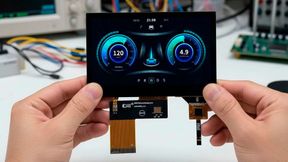
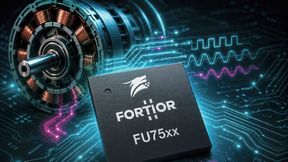
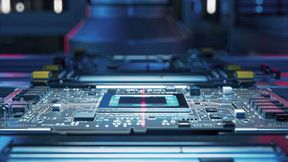
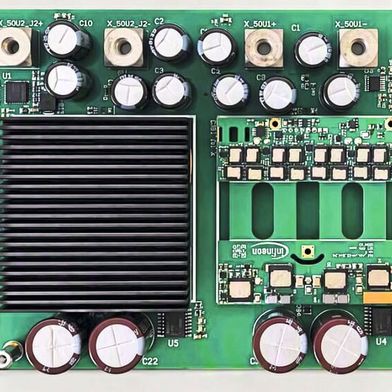
While Secure Elements provide dedicated hardware-based security functions as separate components, PQC-enabled security functions can also be integrated directly into the microcontroller architecture. Examples include microcontrollers such as Infineon’s PSOC Control C3 (Fig. 2) and PSOC Edge families (Fig. 3), as well as Infineon’s automotive PQC-enabled microcontrollers, TRAVEO T2G (Fig. 4) and AURIX TC4x family (Fig. 5), which implement a hardware-based Root of Trust, Secure Boot mechanisms, Arm® TrustZone-M-based isolation, and dedicated cryptographic accelerators.
Dedicated acceleration for hash- and lattice-based algorithms improves PQC performance and makes these MCUs suitable for embedded systems that require both speed and cryptographic flexibility.
Combining Both Approaches
PQC-enabled microcontrollers and Secure Elements serve complementary roles: microcontrollers provide high performance, flexibility, and integrated cryptographic acceleration, while Secure Elements enable secured key storage and isolate critical operations in physically hardened environments. A hybrid architecture combines these strengths and supports cryptographic agility, enabling systems to adapt to evolving PQC standards through updatable software on suitable hardware platforms.
Conclusion
Post-quantum cryptography represents a necessary advancement to address the rise of quantum computing. While current systems remain sufficiently protected against classical attacks, CRQCs could fundamentally undermine existing public-key infrastructures. The successful implementation of PQC therefore requires not only quantum-resistant algorithms but also hardware architectures that meet the increased demands for performance, memory, and flexibility. Secure Elements and PQC-enabled MCU architectures will form the foundation of future quantum-resistant embedded systems. (sb)