Hydrogen is considered a promising alternative for achieving sustainable energy goals, in the commercial as well as the passenger vehicle sector. Honeywell Sensing & Productivity Solutions supports this transition with its HLD sensor series, that primarily enhances the safety of hydrogen systems.
Sustainable: From heavy-duty trucks to buses and cars, and even airplanes and ships, electricity generated from hydrogen is growing in popularity.
(Bild: frei lizensiert bei Pixabay)
From heavy-duty trucks to buses and cars, and even airplanes and ships, electricity generated from hydrogen is growing in popularity for a variety of reasons. No wonder, since hydrogen fuel cell vehicles are climate-friendly, can be refueled quickly, are efficient, and offer a long driving range. Compared to the greenhouse gases emitted by conventional fossil-fuel-based internal combustion engines, hydrogen fuel cells produce only water vapor as an exhaust emission. Although costs and infrastructure remain barriers to adoption, technological advances continue to improve efficiency, while the growing push for decarbonization continues to fuel interest and investment in hydrogen as a clean alternative to fossil fuels.
With the widespread adoption of hydrogen-powered vehicles, there is a tremendous need to detect hydrogen leaks in these systems. Leaks are common in hydrogen systems primarily because hydrogen molecules are extremely small and have a high diffusion rate, allowing them to escape through materials and seals. In addition, hydrogen embrittlement can occur—a process in which hydrogen infiltrates and weakens materials such as steel over time, which in turn creates more opportunities for leaks. Hydrogen is also highly flammable and a colorless, odorless, and tasteless gas that can quickly lead to a dangerous and risky situation. It is essential to detect leaks immediately whenever and wherever they occur.
While there are numerous methods for detecting hydrogen leaks—such as electrochemical sensors and catalytic bead sensors—detection using thermal conductivity detectors (TCD) is considered the most effective and accurate method. This method precisely measures the thermal properties of hydrogen as it passes through the sensor and compares them to the thermal properties of air.
Harsh Conditions? No Problem!
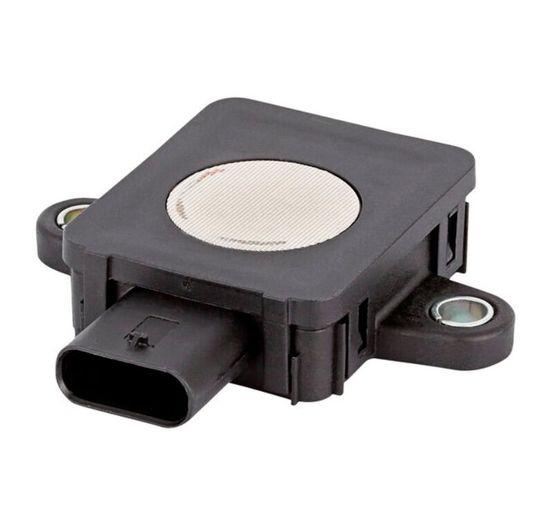
Among the key features that make TCD sensors—particularly hydrogen leak detectors (HLD)—attractive for gas leak detection are stability under various conditions such as shock and vibration, fast response times of less than 2 seconds, high accuracy, and high sensitivity. The HLD-111-111-001 sensor (Figure 1) from Honeywell Sensing & Productivity Solutions uses advanced compensation algorithms to detect small hydrogen leaks and deliver precise results for 10 years without manual intervention.
In addition, TCD-based HLD sensors are less susceptible to contamination by chemicals that could interfere with other sensor technologies. Unlike chemical sensors, which lose performance over time, or catalytic sensors, which are susceptible to contamination by compounds such as sulfur, HLD sensors do not use reactive materials. This improves both service life and reliability.
Figure 1. The Honeywell HLD-111-111-001 sensor uses thermal conductivity detection to reliably and accurately monitor hydrogen leaks
(Bild: DigiKey)
TCD sensors also have a startup time of less than one second and an operating temperature range of –40 to +85°C.
Fast Response Times Improve Safety
The use of thermal conductivity sensors to detect hydrogen leaks offers several advantages. They not only ensure a high degree of accuracy but also a long service life. HLD sensors are designed to operate for up to 10 years without manual intervention or calibration, which reduces maintenance costs and downtime. Unlike other gas sensors, HLD sensors—which are based on thermal conductivity—do not require oxygen to enable efficient and stable measurement. HLD sensors can operate in an inert or low-oxygen atmosphere where other types of sensors would fail.
HLD sensors also have very fast response times, which are critical for safety in applications such as automotive or fuel cell systems. Thanks to their high sensitivity and accuracy, these sensors can detect extremely small hydrogen leaks before they pose a safety risk. Rapid leak detection enables prompt corrective action and prevents a dangerous situation from escalating. Furthermore, they are reliable and durable enough to withstand harsh industrial conditions and support hydrogen safety standards and industry regulations.
Stand: 08.12.2025
Es ist für uns eine Selbstverständlichkeit, dass wir verantwortungsvoll mit Ihren personenbezogenen Daten umgehen. Sofern wir personenbezogene Daten von Ihnen erheben, verarbeiten wir diese unter Beachtung der geltenden Datenschutzvorschriften. Detaillierte Informationen finden Sie in unserer Datenschutzerklärung.
Einwilligung in die Verwendung von Daten zu Werbezwecken
Ich bin damit einverstanden, dass die Vogel Communications Group GmbH & Co. KG, Max-Planckstr. 7-9, 97082 Würzburg einschließlich aller mit ihr im Sinne der §§ 15 ff. AktG verbundenen Unternehmen (im weiteren: Vogel Communications Group) meine E-Mail-Adresse für die Zusendung von redaktionellen Newslettern nutzt. Auflistungen der jeweils zugehörigen Unternehmen können hier abgerufen werden.
Der Newsletterinhalt erstreckt sich dabei auf Produkte und Dienstleistungen aller zuvor genannten Unternehmen, darunter beispielsweise Fachzeitschriften und Fachbücher, Veranstaltungen und Messen sowie veranstaltungsbezogene Produkte und Dienstleistungen, Print- und Digital-Mediaangebote und Services wie weitere (redaktionelle) Newsletter, Gewinnspiele, Lead-Kampagnen, Marktforschung im Online- und Offline-Bereich, fachspezifische Webportale und E-Learning-Angebote. Wenn auch meine persönliche Telefonnummer erhoben wurde, darf diese für die Unterbreitung von Angeboten der vorgenannten Produkte und Dienstleistungen der vorgenannten Unternehmen und Marktforschung genutzt werden.
Meine Einwilligung umfasst zudem die Verarbeitung meiner E-Mail-Adresse und Telefonnummer für den Datenabgleich zu Marketingzwecken mit ausgewählten Werbepartnern wie z.B. LinkedIN, Google und Meta. Hierfür darf die Vogel Communications Group die genannten Daten gehasht an Werbepartner übermitteln, die diese Daten dann nutzen, um feststellen zu können, ob ich ebenfalls Mitglied auf den besagten Werbepartnerportalen bin. Die Vogel Communications Group nutzt diese Funktion zu Zwecken des Retargeting (Upselling, Crossselling und Kundenbindung), der Generierung von sog. Lookalike Audiences zur Neukundengewinnung und als Ausschlussgrundlage für laufende Werbekampagnen. Weitere Informationen kann ich dem Abschnitt „Datenabgleich zu Marketingzwecken“ in der Datenschutzerklärung entnehmen.
Falls ich im Internet auf Portalen der Vogel Communications Group einschließlich deren mit ihr im Sinne der §§ 15 ff. AktG verbundenen Unternehmen geschützte Inhalte abrufe, muss ich mich mit weiteren Daten für den Zugang zu diesen Inhalten registrieren. Im Gegenzug für diesen gebührenlosen Zugang zu redaktionellen Inhalten dürfen meine Daten im Sinne dieser Einwilligung für die hier genannten Zwecke verwendet werden. Dies gilt nicht für den Datenabgleich zu Marketingzwecken.
Recht auf Widerruf
Mir ist bewusst, dass ich diese Einwilligung jederzeit für die Zukunft widerrufen kann. Durch meinen Widerruf wird die Rechtmäßigkeit der aufgrund meiner Einwilligung bis zum Widerruf erfolgten Verarbeitung nicht berührt. Um meinen Widerruf zu erklären, kann ich als eine Möglichkeit das unter https://contact.vogel.de abrufbare Kontaktformular nutzen. Sofern ich einzelne von mir abonnierte Newsletter nicht mehr erhalten möchte, kann ich darüber hinaus auch den am Ende eines Newsletters eingebundenen Abmeldelink anklicken. Weitere Informationen zu meinem Widerrufsrecht und dessen Ausübung sowie zu den Folgen meines Widerrufs finde ich in der Datenschutzerklärung, Abschnitt Redaktionelle Newsletter.
Finally, due to their simpler design, they are more cost-effective and can be manufactured in large quantities using semiconductor sensors, making them an economical option for widespread use.
Typical HLD Applications
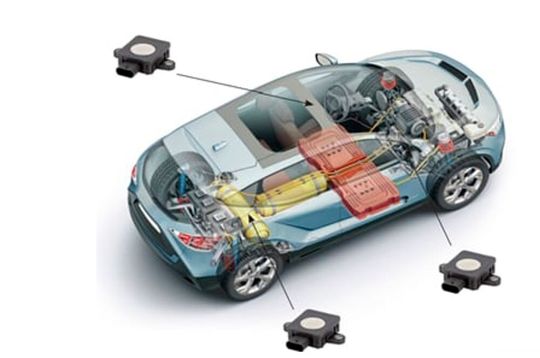
Typical applications for TCD sensors include fuel cell vehicles (FCEVs), hydrogen refueling stations, and marine applications. Like other electric vehicles, FCEVs use electricity to power electric motors, which they generate using a hydrogen-powered fuel cell. Consequently, hydrogen leaks in the fuel system can pose a safety risk and reduce the vehicle’s efficiency. By continuously monitoring the FCEV’s hydrogen tanks, pipelines, and fuel cell stacks, HLD sensors detect leaks to prevent dangerous situations and maintain the efficiency of the hydrogen fuel (Figure 2).
Figure 2. TCD-based HLD sensors used in fuel cell-powered electric vehicles prevent dangerous situations such as leaks and maintain the efficiency of the hydrogen fuel.
(Bild: DigiKey)
Similarly, hydrogen-powered electric vehicles rely on high-pressure tanks and refueling stations, where leaks can pose a significant safety risk. TCDs ensure that automakers can reduce the risk of ignition by continuously monitoring the refueling infrastructure for leaks. At the same time, placing these sensors on hydrogen fueling stations and storage tanks increases operational efficiency and safety, thereby minimizing downtime and strengthening consumer confidence in the hydrogen refueling infrastructure.
Other industries, such as warehouse logistics, are also reaping the benefits of hydrogen power. For example, hydrogen fuel cell forklifts are increasingly being used in warehouses due to their fast refueling capabilities and zero emissions. Workplace safety is ensured by placing HLD sensors at key locations and monitoring for leaks in real time around forklifts and refueling stations. By using HLD sensors, warehouse operators can ensure the safe operation of hydrogen-powered forklifts while maintaining operational efficiency and preventing costly downtime.
High Accuracy
The HLD Series sensors from Honeywell Sensing & Productivity Solutions utilize thermal conductivity measurement techniques and offer high sensitivity, stability, and reliability for a wide range of applications across various industries, such as the automotive and transportation sectors. These sensors incorporate a proprietary algorithm to compensate for factors such as temperature, pressure, and humidity, ensuring accurate measurements across a wide range of operating conditions. This enables them to detect leaks as low as 50 ppm with an accuracy of ±10 percent within two seconds. Thanks to their unique characteristics, HLD sensors also prevent false readings caused by the presence of other environmental gases, such as carbon monoxide or hydrocarbons.
The HLD sensor can be customized to meet application requirements, such as for light-duty applications and with an auxiliary output. The solutions can be tailored to precise specifications to accelerate time-to-market, reduce total system costs, and increase reliability. HLD sensors are also available in a rugged polycarbonate housing for protection and ease of use, with a UL94V0 flame retardancy rating and an IP67 protection rating, as well as in a housing-free (PCB-only) version for custom integration. (se)