Rising rack power, 800 VDC distribution, and compact power conversion demand higher power density from capacitors, magnetics, and EMI suppression components under tighter operating constraints.
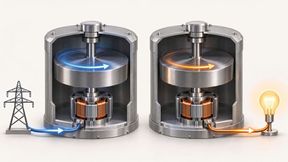
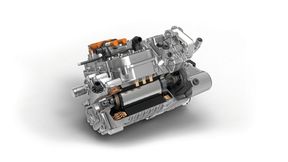
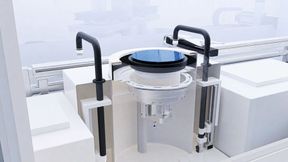
Solid state: Unlike conventional transformers, SST architectures combine power conversion and transformer functionality using advanced power electronics.
(Source: TDK)
For much of the data center’s history, computing performance has been increased without fundamentally changing the way power was distributed. Artificial intelligence (AI) is challenging this long-established approach.
Accelerated computing concentrates enormous processing capabilities and power demands into densely packed systems. More power must be converted, distributed, and delivered within a limited space, all while keeping losses, heat, and electrical noise under control.
As power delivery becomes a defining engineering challenge for AI infrastructure, the demands placed on passive components likewise increase.
From 800 VDC to below 1 V
The industry is moving toward higher-voltage DC distribution, developing 800 VDC architectures for next-generation AI data centers. Increasing distribution voltage reduces current, helping to reduce conductor losses and the amount of copper required as rack power rises.
AI processors operate at very low core voltages, so the power chain must bridge the gap between high-voltage distribution and sub-1 V loads. Multiple conversion stages sit between these points, including rectification and power-factor correction (PFC), DC link stages, intermediate bus conversion, and point-of-load (PoL) regulation. Each stage creates specific requirements for passive components.
At the high-voltage end, capacitors provide energy storage, DC link stabilization and filtering while withstanding electrical and thermal stress. Inductors, transformers and capacitors become central to efficient DC-DC conversion further down the chain. Close to the processor, low voltages and extremely high currents make even small amounts of resistance and inductance significant.
Therefore, passive-component performance must be considered across the power-delivery network rather than in terms of isolated component selection.
Power density reshapes capacitors
In high-density AI power systems, capacitance, rated voltage, and ripple-current capability are still important, but volumetric efficiency, equivalent series resistance (ESR), equivalent series inductance (ESL), thermal performance, and lifetime are becoming more important. Higher switching frequencies can reduce the size of certain passive components, but they also make parasitic characteristics a more significant factor.
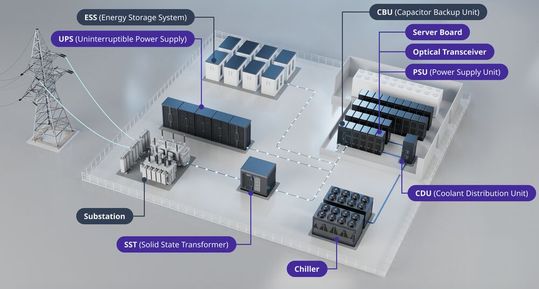
ESR generates heat when ripple current flows. ESL, on the other hand, affects circuit behavior at higher frequencies and during fast transients. Different points in the power chain favor different capacitor technologies. AI server power supplies (PSUs), for example, must handle extreme, repetitive load cycles driven by the erratic, bursty nature of modern GPU and accelerator workloads. For these PSUs, TDK has introduced ultra-compact aluminum electrolytic capacitors with a very high CV product, which are required in the DC link. If in the future the solid-state transformers (SSTs) take over the energy conversion, most probably a separate capacitor backup unit (CBU) with ultra-compact aluminum electrolytic capacitors will be placed close to the rack. The SST itself can use aluminum electrolytic and/or film capacitors in the DC link, depending on voltage, capacitance, and ripple-current requirements.
The key here is determining the required capacitance to assess how much usable capacity can be provided within the available volume at the specified voltage, frequency, and temperature.
Magnetics move closer to the load
Inductors, transformers, and chokes face similar pressures. Higher switching frequencies can reduce the required inductance and magnetic-core volume.
At high frequencies, core and winding losses become more significant, and higher currents increase the impact of DC resistance and magnetic saturation. In addition, as magnetics shrink, thermal management becomes more difficult.
The challenge increases in AI processors, where low supply voltages interact with rapidly changing, high-current demands. Resistance in PCB traces, vias, and package connections results in conduction losses, and their inductance can limit transient response speed.
Stand: 08.12.2025
Es ist für uns eine Selbstverständlichkeit, dass wir verantwortungsvoll mit Ihren personenbezogenen Daten umgehen. Sofern wir personenbezogene Daten von Ihnen erheben, verarbeiten wir diese unter Beachtung der geltenden Datenschutzvorschriften. Detaillierte Informationen finden Sie in unserer Datenschutzerklärung.
Einwilligung in die Verwendung von Daten zu Werbezwecken
Ich bin damit einverstanden, dass die Vogel Communications Group GmbH & Co. KG, Max-Planckstr. 7-9, 97082 Würzburg einschließlich aller mit ihr im Sinne der §§ 15 ff. AktG verbundenen Unternehmen (im weiteren: Vogel Communications Group) meine E-Mail-Adresse für die Zusendung von redaktionellen Newslettern nutzt. Auflistungen der jeweils zugehörigen Unternehmen können hier abgerufen werden.
Der Newsletterinhalt erstreckt sich dabei auf Produkte und Dienstleistungen aller zuvor genannten Unternehmen, darunter beispielsweise Fachzeitschriften und Fachbücher, Veranstaltungen und Messen sowie veranstaltungsbezogene Produkte und Dienstleistungen, Print- und Digital-Mediaangebote und Services wie weitere (redaktionelle) Newsletter, Gewinnspiele, Lead-Kampagnen, Marktforschung im Online- und Offline-Bereich, fachspezifische Webportale und E-Learning-Angebote. Wenn auch meine persönliche Telefonnummer erhoben wurde, darf diese für die Unterbreitung von Angeboten der vorgenannten Produkte und Dienstleistungen der vorgenannten Unternehmen und Marktforschung genutzt werden.
Meine Einwilligung umfasst zudem die Verarbeitung meiner E-Mail-Adresse und Telefonnummer für den Datenabgleich zu Marketingzwecken mit ausgewählten Werbepartnern wie z.B. LinkedIN, Google und Meta. Hierfür darf die Vogel Communications Group die genannten Daten gehasht an Werbepartner übermitteln, die diese Daten dann nutzen, um feststellen zu können, ob ich ebenfalls Mitglied auf den besagten Werbepartnerportalen bin. Die Vogel Communications Group nutzt diese Funktion zu Zwecken des Retargeting (Upselling, Crossselling und Kundenbindung), der Generierung von sog. Lookalike Audiences zur Neukundengewinnung und als Ausschlussgrundlage für laufende Werbekampagnen. Weitere Informationen kann ich dem Abschnitt „Datenabgleich zu Marketingzwecken“ in der Datenschutzerklärung entnehmen.
Falls ich im Internet auf Portalen der Vogel Communications Group einschließlich deren mit ihr im Sinne der §§ 15 ff. AktG verbundenen Unternehmen geschützte Inhalte abrufe, muss ich mich mit weiteren Daten für den Zugang zu diesen Inhalten registrieren. Im Gegenzug für diesen gebührenlosen Zugang zu redaktionellen Inhalten dürfen meine Daten im Sinne dieser Einwilligung für die hier genannten Zwecke verwendet werden. Dies gilt nicht für den Datenabgleich zu Marketingzwecken.
Recht auf Widerruf
Mir ist bewusst, dass ich diese Einwilligung jederzeit für die Zukunft widerrufen kann. Durch meinen Widerruf wird die Rechtmäßigkeit der aufgrund meiner Einwilligung bis zum Widerruf erfolgten Verarbeitung nicht berührt. Um meinen Widerruf zu erklären, kann ich als eine Möglichkeit das unter https://contact.vogel.de abrufbare Kontaktformular nutzen. Sofern ich einzelne von mir abonnierte Newsletter nicht mehr erhalten möchte, kann ich darüber hinaus auch den am Ende eines Newsletters eingebundenen Abmeldelink anklicken. Weitere Informationen zu meinem Widerrufsrecht und dessen Ausübung sowie zu den Folgen meines Widerrufs finde ich in der Datenschutzerklärung, Abschnitt Redaktionelle Newsletter.
These factors are driving interest in moving voltage conversion closer to the processor. One approach is vertical power-delivery architectures, which position the PoL conversion beneath the processor rather than beside it. While shortening the power path reduces parasitic resistance and inductance, this approach also imposes severe constraints on component height, footprint, and thermal behavior.
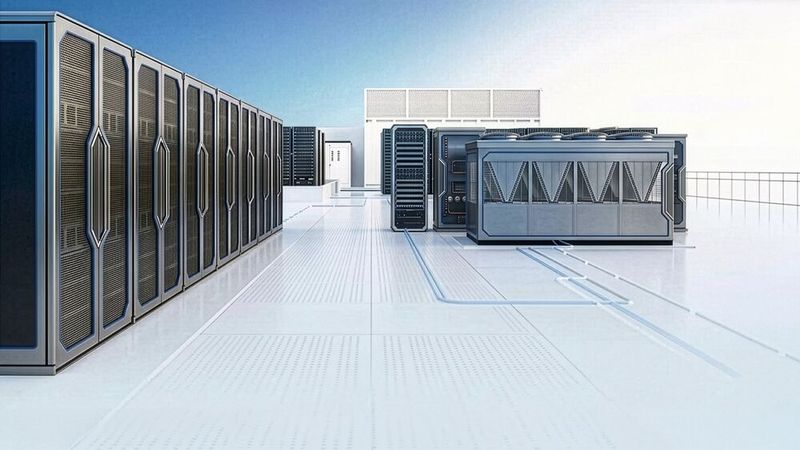
Power architecture: Typical power infrastructure of an AI data center.
(Source: TDK)
Faster switching raises the EMI challenge
Wide-bandgap semiconductors, such as silicon carbide (SiC) and gallium nitride (GaN), enable fast voltage and current transitions, enabling efficient, high-frequency conversion. However, they also generate high-frequency energy that can be coupled through parasitic capacitances and inductances into neighboring circuits, cables, and chassis structures. Dense AI systems leave less room for filtering, so EMI suppression becomes a system-level design problem.
Common-mode chokes, differential-mode inductors, filter capacitors, and ferrites must attenuate unwanted energy while avoiding unacceptable loss, volume, and thermal burden. If a suitable filter component is positioned too far from the noise source, it may be less effective because the trace between the two becomes part of the coupling path.
Power integrity, signal integrity, and EMC become increasingly interconnected as power conversion and high-speed digital electronics occupy the same constrained environment. Parasitic behavior also becomes a first-order design parameter.
Heat links the power chain together
The ripple current generates heat due to the ESR of the capacitors. Additionally, the current generates heat in the magnetic components due to winding resistance, and semiconductor losses contribute to heat generation as well. With increasing densities, passive components must contend with self-heating and heat from nearby sources. This directly affects reliability because operating temperature significantly impacts capacitor lifetime, and magnetic properties and winding resistance also vary with temperature.
Creating an effective path for heat to escape merely shifts the design constraints elsewhere. Therefore, temperature sensing is essential. TDK offers a variety of NTC sensor technologies, including bondable products.
From component selection to system design
Using higher distribution voltages can reduce current and conductor requirements. Higher-frequency conversion increases power density. Bringing voltage regulation closer to the processor can reduce distribution losses and improve transient response. However, each improvement alters the requirements elsewhere.
Higher voltages increase the demand for better dielectric and insulation performance. Higher switching frequencies increase sensitivity to parasitics, magnetic losses, and EMI. Higher current densities make resistance, saturation, and thermal performance critical. Greater integration shortens interconnections, but it also concentrates heat into a smaller space.
In short, no single component technology solves the AI power challenge. Designers must increasingly consider the electrical, magnetic, mechanical, and thermal behavior of passive components within the system.
This also increases the value of accurate component modeling and simulation. Electromagnetic and thermal analysis can identify resonances, current concentrations, and hotspots before hardware is built. Realistic component models can also reveal behavior that goes beyond the values found in datasheets.
This is where expertise in components and materials becomes advantageous. TDK's experience with ultra-compact aluminum electrolytic capacitors, film capacitors, MLCCs and EMC products, power inductors, and integrated magnetics, and NTCs gives its engineers a system-level perspective on how these technologies interact within next-generation power architectures.
The passive infrastructure behind AI
The computational capability of an AI data center can be seen in its accelerators, networking, and software. The electrical infrastructure required to supply those processors with stable, efficient power is less visible.
From 800 VDC distribution systems to sub-1 V rails that power accelerators, passive components store energy, filter noise, control current, and enable efficient power conversion at every stage. However, their role is changing because of shrinking margins. There is less space for excess copper, less tolerance for losses, less room for bulky filters, and less thermal headroom.
AI data centers are changing the role of passive components, creating a more interconnected relationship between electrical performance, power density, thermal capability, and system integration. (mr)
* Anirban Roy is Director – Industrial, Home Appliance & Application Engineering at TDK.