



:quality(80)/p7i.vogel.de/wcms/d7/05/d7050b29ea044c2d42f326a2461dab62/0133138830v2.jpeg "David Walther (links) und Carlos Rincon, wissenschaftliche Mitarbeiter am Lehrstuhl für Werkstoffe und Zuverlässigkeit mikrotechnischer Systeme der Technischen Universität Chemnitz, installieren einen neuen Prüfstand im Inneren der Kammer eines Helium-Kryostaten. (Bild: TU Chemnitz)")
:quality(80)/p7i.vogel.de/wcms/68/82/688233aa2cd9e89a6f042a1f3f7332d7/0133122313v2.jpeg "Vom physischen Chip zum stabilen Rechenraum: Die industrielle Nutzbarkeit von Quantenprozessoren bemisst sich an der Circuit-Level-Performance – nicht an reinen Qubit-Zahlen. (Bild: Gemini / KI-generiert)")
:quality(80)/p7i.vogel.de/wcms/40/77/40770331c5b4af5e59516bb8bb76a866/0133084281v2.jpeg "Der extraleichte R1 von Unitree. (Bild: Unitree)")
:quality(80)/p7i.vogel.de/wcms/37/b7/37b756f3da1537fc72521e7de20a54ce/0133191981v2.jpeg "Symbolbild: Der KI-Rechencenter-Boom wirkt sich auch auf die Verfügbarkeit von passiven Bauelementen aus. (Bild: Dall-E / KI-generiert)")
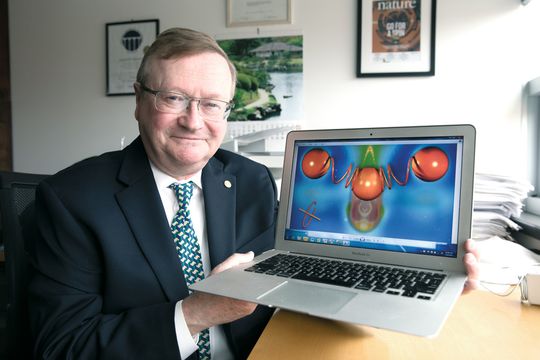
:quality(80)/p7i.vogel.de/wcms/07/ea/07ea8079334f970dc47e1c66f288042d/0133178779v2.jpeg "Marcus Ossiander, Associate Professor am Institut für Experimentalphysik der TU Graz, war an der Entwicklung der Quantenwell-Struktur mit Metaoberfläche beteiligt. (Bild: Lunghammer - TU Graz )")
:quality(80)/p7i.vogel.de/wcms/04/99/04995f62f22bc0ad601344e9df68ae8e/0133152766v2.jpeg "Marcus Ossiander vom Institut für Experimentalphysik der TU Graz war an der Entwicklung der Quantenwell-Metasurface beteiligt. (Bild: Lunghammer/TU Graz)")
:quality(80)/p7i.vogel.de/wcms/55/4a/554ae759b37bf6f75ae0a015b8ab1534/0133183641v2.jpeg "Edge-AI-Security: Je autonomer KI-Systeme am Netzrand agieren, desto wichtiger wird eine durchgängige Vertrauenskette – vom sicheren Boot bis zum geschützten Modell. (Bild: NXP)")
:quality(80)/p7i.vogel.de/wcms/63/9f/639fcf9a3405afeb5b40ff010966d74b/0133127211v2.jpeg "Einheitliche Schnittstelle: Mit dem Model Hardware Standard will Anthropic erreichen, dass KI-Agenten programmierbare Laborgeräte und Roboterarme über eine einheitliche Treiberschicht ansprechen können. (Bild: Dall-E / KI-generiert)")
:quality(80)/p7i.vogel.de/wcms/da/1b/da1bc353f79ddc2b27c44c100b715c99/0133127761v2.jpeg "(Bild: Innodisk)")
:quality(80)/p7i.vogel.de/wcms/7f/2f/7f2f8fdc44bb9a8eb10c91d4ed89950f/0132825173v2.jpeg "Immer im Überblick: Das volle Programm des ESE Kongress 2026 mit über 100 Beiträgen - Keynotes, Vorträge und Seminare - ist nun auf www.ese-kongress.de online. (Bild: Elisabeth Wiesner)")
:quality(80)/p7i.vogel.de/wcms/de/4f/de4f4d6ff4eca78d95a5082b9028e120/0132945424v2.jpeg "Das BrainBoard 1500 bringt den KI-Beschleuniger AKD1500 auf ein Entwicklerboard. (Bild: Brainchip)")
:quality(80)/p7i.vogel.de/wcms/7b/8a/7b8a66fdd13fe9fdb60be36890abfc99/0133086566v2.jpeg "Vantys kombiniert eine hochpräzise DC-Hochspannungsversorgung mit einer besonders schnellen Regelung, flexiblen Schnittstellen und einer wartungsfreien Systemarchitektur (Bild: DBK)")
:quality(80)/p7i.vogel.de/wcms/64/94/64946fe89c716c313dfb32bec5b30a0a/0133056967v2.jpeg "Unverzichtbar: Schaltnetzteile haben sich über Jahrzehnte kontinuierlich weiterentwickelt. Fortschritte bei Leistungshalbleitern, magnetischen Bauelementen, Regelungstechnik und Wandlertopologien ermöglichen heute hohe Wirkungsgrade und Leistungsdichten bei kompakter Bauform. (Bild: Stefan Bausewein)")
:quality(80)/p7i.vogel.de/wcms/a4/07/a4075a688c12316dad6007f9a649ec44/0133085979v2.jpeg "Vishay erweitert sein Portfolio um die RPWA‑650‑Serie. (Bild: Vishay)")
:quality(80)/p7i.vogel.de/wcms/3d/67/3d6777d7a99bdf88f86798cd73451538/0133004756v2.jpeg "Die AGI-CPU von Arm wurde im März 2026 angekündigt. Im Rahmen der Hot Chips 2026 sind die Entwickler ins Detail gegangen. (Bild: Arm)")
:quality(80)/p7i.vogel.de/wcms/8a/2e/8a2e7d2a89ffe55c545dd6c831ed154e/0132246788v2.jpeg "Über 500 Teilnehmer, 120 Referenten: Die FPGA Conference Europe platzte in diesem Jahr aus allen Nähten – und wurde ihrem Anspruch als Leitkongress der FPGA-Welt einmal mehr gerecht. (Bild: Tobi Giessen)")
:quality(80)/p7i.vogel.de/wcms/06/a1/06a158e32b18d99fcea65547cec5d4c7/0132069489v2.jpeg "Mit direkter Integration von Speicher ins Chip-Package verspricht AMD mit dem Versal Premium Gen 2 SoC eine schnellere Datenübertragung, verringerte Latenz und einem potentiell geringere Stromverbrauch. (Bild: AMD)")
:quality(80)/p7i.vogel.de/wcms/86/2a/862afb1de8423bb7401098a2fd268281/0131792672v2.jpeg "Bild 1: Ein Spannungsversorgungskonzept für Lasten, welche eine vorgegebene Ein- und Abschaltreihenfolge (Sequencing) benötigen. (Bild: ADI)")
:quality(80)/p7i.vogel.de/wcms/91/de/91de4610a7ffe43924e12da2981b3e28/0133086550v2.jpeg "Die neuen AEVA- und AEVB-Serien von Kyocera AVX sind für bis zu 30 g Beschleunigung ausgelegt und lassen sich automatisiert bestücken. (Bild: Kyocera AVX)")
:quality(80)/p7i.vogel.de/wcms/a6/c0/a6c06a22bea85ff7f6c13ce4d6c8b06a/0133021608v2.jpeg "Ein kernloser Hall-Effekt-Stromsensor erfasst mehrere räumliche Komponenten des Magnetfelds und soll dadurch Messfehler infolge von Vibrationen und Montageabweichungen reduzieren. (Bild: Texas Instruments)")
:quality(80)/p7i.vogel.de/wcms/4e/9f/4e9fdabefc243effcbc732982d6c6044/0133184134v2.jpeg "5G-Netzwerke und Endgeräte müssen Steuerinformationen regelmäßig überwachen. Die 3GPP-Release-17-Funktion SSSG soll diesen Aufwand reduzieren (Symbolbild). (Bild: frei lizenziert)")
:quality(80)/p7i.vogel.de/wcms/52/9b/529b7bc41f8c6f43d6ef52d93fa7523e/0133110886v2.jpeg "Ein Mitarbeiter von NMi Testlab entnimmt eine elektrische Baugruppe aus einer thermischen Prüfkammer. Der Hitzeschutzanzug schützt ihn beim Umgang mit dem Prüfling unter hohen Temperaturen. (Bild: NMI Testlab)")
:quality(80)/p7i.vogel.de/wcms/45/32/45329f4e0d2749bcf0adebfc89eff3a4/0133165310v2.jpeg "Messtechnik gehört zur Validierung elektronischer Systeme. Bei schnellen Datenschnittstellen prüfen Entwickler unter anderem Signalqualität, Jitter und Übertragungsverluste. (Bild: frei lizenziert)")
:quality(80)/p7i.vogel.de/wcms/34/99/3499ee98b0439dde12ec3ef9ed421003/0133126924v2.jpeg "Linearverstärker mit integriertem Bias-Tee gleicht Signalverluste im Testpfad aus. (Bild: Anritsu)")
:quality(80)/p7i.vogel.de/wcms/cf/56/cf565dd8e45c688918f906980e9d5d6c/0133164470v2.jpeg "KI-basierende Robotik hat das Potenzial sich in zehn bis fünfzehn Jahren zu einem Industriezweig in Europa hin zu entwickeln, der in der Größe und Bedeutung der heutigen Automobilindustrie entspricht. Hier ist zu sehen, wie DLR-Roboter Rollin‘ Justin eigenständig eine Alltagsaufgabe übernimmt und die Küchenpflanze wässert. (Bild: DLR (CC BY-NC-ND 3.0))")
:quality(80)/p7i.vogel.de/wcms/76/23/7623ef5cda48852baabdae0fb68295e3/0133127938v2.jpeg "Das Wachstum der Nachfrage nach Elektronik- und Halbleiterprodukten wird voraussichtlich anhalten, was Hersteller dazu drängt, zu innovieren und schneller zu produzieren, während Herausforderungen bewältigt werden. (Bild: Siemens)")
:quality(80)/p7i.vogel.de/wcms/c0/86/c086239f80e454b7b759d972c14506f2/0133137734v2.jpeg "Offene und rekonfigurierbare, also für unterschiedliche Anwendungen anpassbare, Hard- und Softwareplattformen könnten eine deutlich größere Rolle bei der Entwicklung neuer Ultraschall-Wearables übernehmen.
(Bild: TU Bergakademie Freiberg )")
:quality(80)/p7i.vogel.de/wcms/9b/7a/9b7a862b6a4041366b45b37472dacac1/0133147099v2.jpeg "Die Leistung des EMS-Dienstleisters steht im Vordergrund, doch die lässt sich nur schlecht fotografieren und in Sichtbarkeit verwandeln. Beim EMS-Tag wollen wir Ihnen im Rahmen eines Workshops helfen. (Bild: Dall-E / KI-generiert)")
:quality(80)/p7i.vogel.de/wcms/28/02/2802d3016d447b3034dbedf878deee19/0133155599v2.jpeg "Perzeptron zeig auf der EFX mit Partnern zwei Live-Use-Cases. (Bild: Perzeptron)")
:quality(80)/p7i.vogel.de/wcms/17/40/17408075954df78831c35e7576884ba2/0133153751v2.jpeg "Die steigt Nachfrage nach KI-Infrastruktur wirkt sich direkt auf die Lieferkette aus und entlarvt Flaschenhälse in der Produktion. (Bild: Broadcom)")
:quality(80)/p7i.vogel.de/wcms/7e/1f/7e1f6804ac4b005ac165d39f2c0eab34/0133164888v2.jpeg "Z.ai hat ChatGPT gesagt, wie es gerne dargestellt werden möchte. (Bild: Dall-E / KI-generiert)")
:quality(80)/p7i.vogel.de/wcms/c1/f4/c1f479f73f54a5ba9a2698314a3d2517/0133155134v2.jpeg "Der Reinraum Klasse 8 von Beflex in Frickenhausen. (Bild: Kontron / Eberl Photo)")
:quality(80)/p7i.vogel.de/wcms/08/ff/08ffb0090e03aed8af0efea86bdaa375/0133122730v2.jpeg "Jan Krott (links) und Michael Blass (rechts) bei der Vertragsunterzeichnung zur Übernahme der Krott Electronic GmbH durch Igus. Durch die Bündelung der Kompetenzen soll das Angebot an individuellen Systemlösungen weiter ausgebaut werden (Bild: Igus SE & Co. KG)")
:quality(80)/p7i.vogel.de/wcms/6b/1d/6b1dde86fdb120b4cf9b8bc8573c415a/0133056789v3.jpeg "Wir bezahlen für Systeme, die menschliche Arbeit übernehmen, ohne bislang geklärt zu haben, wie die dadurch entstehende Wertschöpfung künftig verteilt werden soll. (Bild: frei lizenziert)")
:quality(80)/p7i.vogel.de/wcms/47/20/47201c1ce3692dbdb4e7e62709de4e16/0132649717v3.jpeg "Ingenieurberufe verändern sich: Neben der aktuellen Konjunktur treiben Digitalisierung, KI und neue Technologien den Bedarf an kontinuierlicher Qualifizierung. (Bild: frei lizenziert)")
:quality(80)/p7i.vogel.de/wcms/4e/41/4e4159d1e93e67d47bd2f51a90691b23/0131548978v2.jpeg "Transformation im Engineering: KI-gestützte Systeme generieren zunehmend selbstständig Schaltschranklayouts und entlasten Konstrukteure von zeitraubenden Routineaufgaben. (Bild: WSCAD)")
Stand: 08.12.2025
Es ist für uns eine Selbstverständlichkeit, dass wir verantwortungsvoll mit Ihren personenbezogenen Daten umgehen. Sofern wir personenbezogene Daten von Ihnen erheben, verarbeiten wir diese unter Beachtung der geltenden Datenschutzvorschriften. Detaillierte Informationen finden Sie in unserer Datenschutzerklärung.
Einwilligung in die Verwendung von Daten zu Werbezwecken
Ich bin damit einverstanden, dass die Vogel Communications Group GmbH & Co. KG, Max-Planckstr. 7-9, 97082 Würzburg einschließlich aller mit ihr im Sinne der §§ 15 ff. AktG verbundenen Unternehmen (im weiteren: Vogel Communications Group) meine E-Mail-Adresse für die Zusendung von redaktionellen Newslettern nutzt. Auflistungen der jeweils zugehörigen Unternehmen können hier abgerufen werden.
Der Newsletterinhalt erstreckt sich dabei auf Produkte und Dienstleistungen aller zuvor genannten Unternehmen, darunter beispielsweise Fachzeitschriften und Fachbücher, Veranstaltungen und Messen sowie veranstaltungsbezogene Produkte und Dienstleistungen, Print- und Digital-Mediaangebote und Services wie weitere (redaktionelle) Newsletter, Gewinnspiele, Lead-Kampagnen, Marktforschung im Online- und Offline-Bereich, fachspezifische Webportale und E-Learning-Angebote. Wenn auch meine persönliche Telefonnummer erhoben wurde, darf diese für die Unterbreitung von Angeboten der vorgenannten Produkte und Dienstleistungen der vorgenannten Unternehmen und Marktforschung genutzt werden.
Meine Einwilligung umfasst zudem die Verarbeitung meiner E-Mail-Adresse und Telefonnummer für den Datenabgleich zu Marketingzwecken mit ausgewählten Werbepartnern wie z.B. LinkedIN, Google und Meta. Hierfür darf die Vogel Communications Group die genannten Daten gehasht an Werbepartner übermitteln, die diese Daten dann nutzen, um feststellen zu können, ob ich ebenfalls Mitglied auf den besagten Werbepartnerportalen bin. Die Vogel Communications Group nutzt diese Funktion zu Zwecken des Retargeting (Upselling, Crossselling und Kundenbindung), der Generierung von sog. Lookalike Audiences zur Neukundengewinnung und als Ausschlussgrundlage für laufende Werbekampagnen. Weitere Informationen kann ich dem Abschnitt „Datenabgleich zu Marketingzwecken“ in der Datenschutzerklärung entnehmen.
Falls ich im Internet auf Portalen der Vogel Communications Group einschließlich deren mit ihr im Sinne der §§ 15 ff. AktG verbundenen Unternehmen geschützte Inhalte abrufe, muss ich mich mit weiteren Daten für den Zugang zu diesen Inhalten registrieren. Im Gegenzug für diesen gebührenlosen Zugang zu redaktionellen Inhalten dürfen meine Daten im Sinne dieser Einwilligung für die hier genannten Zwecke verwendet werden. Dies gilt nicht für den Datenabgleich zu Marketingzwecken.
Recht auf Widerruf
Mir ist bewusst, dass ich diese Einwilligung jederzeit für die Zukunft widerrufen kann. Durch meinen Widerruf wird die Rechtmäßigkeit der aufgrund meiner Einwilligung bis zum Widerruf erfolgten Verarbeitung nicht berührt. Um meinen Widerruf zu erklären, kann ich als eine Möglichkeit das unter https://contact.vogel.de abrufbare Kontaktformular nutzen. Sofern ich einzelne von mir abonnierte Newsletter nicht mehr erhalten möchte, kann ich darüber hinaus auch den am Ende eines Newsletters eingebundenen Abmeldelink anklicken. Weitere Informationen zu meinem Widerrufsrecht und dessen Ausübung sowie zu den Folgen meines Widerrufs finde ich in der Datenschutzerklärung, Abschnitt Redaktionelle Newsletter.
:quality(80)/p7i.vogel.de/wcms/3f/45/3f45b76aef06121a2016dd70cbecd5f3/0127037255v2.jpeg "Piezoelectric actuators turn flat car displays into responsive surfaces, providing tactile and acoustic feedback for safer, more intuitive interaction. (Bild: TAIYO YUDEN CO., LTD.)")
:quality(80)/p7i.vogel.de/wcms/72/45/7245dc0f6ac41ac6bcf86d8e5d761c15/0132780694v3.jpeg "AI chip size is increasing, requiring a larger power circuit area while keeping the overall board size as small as possible. (Bild: TAIYO YUDEN)")