




:quality(80)/p7i.vogel.de/wcms/ce/09/ce09cbfd70dd50b7f8e9e923c4fd8f3d/0129481054v2.jpeg "Im neuen Projekt „CircEL“ erforschen Ingenieure und Juristen gemeinsam Wege zu einer wirklichen Kreislaufwirtschaft. Die Carl-Zeiss-Stiftung fördert das Forschungsprojekt mit drei Millionen Euro für die kommenden sechs Jahre. (Bild: Silvia Wolf / Universität Freiburg)")
:quality(80)/p7i.vogel.de/wcms/59/bf/59bfd2822d711b0ae2cb9383b679f38d/0129302533v2.jpeg "Im Lehrstuhl für KI-Chip Design in der Technischen Universität München (TUM) ist der EU-weit erste KI-Chip mit moderner 7-Nanometer-Technologie entstanden. Im Bild: Lehrstuhlinhaber Prof. Hussam Amrouch. (Bild: Andreas Heddergott / TU Muenchen)")
:quality(80)/p7i.vogel.de/wcms/c1/94/c19403fe0194686b2f4911be7e1e9539/0129294209v2.jpeg "Supraleitung kann verborgene magnetische Ordnungen offenlegen, indem sie gezwungen wird, ihre eigenen Symmetrien zu brechen. (Bild: frei lizenziert)")
:quality(80)/p7i.vogel.de/wcms/27/e3/27e33398c34f4f466fe70a294ec2f1f1/0129569421v2.jpeg "Renesas-CEO Hidetsoshi Shibata (Mitte links) und Globalfoundries-Geschäftsführer Tim Breen (Mitte rechts) bei der Unterzeichnung der gemeinsamen Fertigungsvereinbarung. (Bild: Renesas)")
:quality(80)/p7i.vogel.de/wcms/ca/81/ca81333a02b8c934dcad5c1745435a3d/0125018126v2.jpeg "Gehäuseschirmung und EMV: Ein umfassender Leitfaden zum Thema gibt der fünfteilige Beitrag. Teil 1 thematisiert Emissionsquellen auf der Leiterplatte. (Bild: Papisut - stock.adobe.com / KI-generiert)")
:quality(80)/p7i.vogel.de/wcms/06/ce/06cece1c695ea91c5108cf7f583feea5/0129540778v2.jpeg "Vernetzte Industrie: Panasonic präsentiert neue Funkmodule und Sensortechnologien auf der diesjährigen Embedded World. (Bild: Panasonic)")
:quality(80)/p7i.vogel.de/wcms/3f/69/3f69e2ac28f7f9ee735680c5e5d53d94/0129470810v2.jpeg "Demo des ChipStack AI Super Agent. (Bild: Cadence)")
:quality(80)/p7i.vogel.de/wcms/7b/57/7b5725dd2e7545ab4904a9b7a3735721/0129309389v2.jpeg "Die embedded world 2026 findet vom 10. bis zum 12. März 2026 statt. (Bild: NürnbergMesse / Thomas Geiger)")
:quality(80)/p7i.vogel.de/wcms/b1/77/b1770e7d7499d7f807a2d5236dc081c8/0129461958v2.jpeg "Dr. Joshua Fryman, Intel Fellow und CTO der Intel Government Technologies (Mitte), stellte zusammen mit Vertretern der Softbank-Tochter Saimemory den ersten Prototypen des neuartigen ZAM-Speichers auf der Intel-Hausmesse Intel Connection 2026 in Japan vor. (Bild: Intel Japan)")
:quality(80)/p7i.vogel.de/wcms/9d/f7/9df7b15f177b8b3ca0e93cf965a476bc/0129529705v2.jpeg "Speicherfehler wie Pufferüberläufe oder Use-After-Free gefährden die Stabilität von Fahrzeugsoftware. Formale Verifizierung hilft dabei, aus getesteter Software nachweislich sichere Systeme zu machen. (Bild: Dall-E / KI-generiert)")
:quality(80)/p7i.vogel.de/wcms/67/3f/673f67f2c8dbef2f0f6a5d01ec1f5ec6/0129505643v2.jpeg "Arduino App Lab: Das aktuelle Release 0.4.0 bringt etliche hilfreiche Neuerungen. (Bild: Arduino)")
:quality(80)/p7i.vogel.de/wcms/1d/e5/1de5e11918cfb261b8b5c4632fc1f7db/0129456364v3.jpeg "An drei Standorten in Litauen entstehen die Speicher. (Bild: Nidec Conversion)")
:quality(80)/p7i.vogel.de/wcms/e8/a8/e8a8a953c77af9bbf208cce6454139d4/0129427931v3.jpeg "Strategisch: EPC lizenziert eGaN-Technologie an Renesas (Bild: frei lizenziert)")
:quality(80)/p7i.vogel.de/wcms/61/85/6185c7a5619aba866e3b237690bea839/0129334467v3.jpeg "So soll die Fabrik im polnischen Wałbrzych aussehen. (Bild: Sungrow Power Supply Co., Ltd.)")
:quality(80)/p7i.vogel.de/wcms/c7/f6/c7f61d0437c7f8fca3c6ff947ba2ad62/0129322490v2.jpeg "AMD hat die zweite Generation der Kintex UltraScale+ Gen 2 FPGA-Familie vorgestellt, die mit PCIe Gen4 den 4K-AV-over-IP-Betrieb für 4K/8K-Medienanwendungen unterstützt. (Bild: AMD)")
:quality(80)/p7i.vogel.de/wcms/66/0c/660c31afa35398bac9be42f2be73fdc4/0129073529v2.jpeg "FPGAs lösen Performance-Engpässe, gelten aber in der Programmierung als schwer zugänglich. Die universelle Programmiersprache Livt soll die Hürde senken – korrekt, deterministisch und HDL-kompatibel. (Bild: Toby Giessen / VCG)")
:quality(80)/p7i.vogel.de/wcms/9c/35/9c35ed04fa562b190cbc496a695a6802/0128823288v1.jpeg "Optimiert auf Skalierung oder Geschwindigkeit: Die SGET hat den offenen Standard oHFM für FPGA-Module in zwei Varianten vorgestellt. (Bild: SGET (Screencast / Screenshot))")
:quality(80)/p7i.vogel.de/wcms/d7/e6/d7e6fe4124ec2efc726e9c3f2c2a4cfc/0128241940v2.jpeg "(Bild: frei lizenziert)")
:quality(80)/p7i.vogel.de/wcms/92/fd/92fd7c3102fc8b710244ad109c079be6/0129551381v2.jpeg "Digitale Selbstbestimmung: Das neue Assessment-Tool von Red Hat hilft Unternehmen dabei, die volle Kontrolle über ihre IT-Infrastruktur zurückzugewinnen. (Bild: KI-generiert)")
:quality(80)/p7i.vogel.de/wcms/8f/bf/8fbf2cfa5f7238e41e046b12e936212b/0129541806v3.jpeg "Der Pistenbully 600 E+ ist eine hybride Pistenraupe, die nicht an die Steckdose muss. (Bild: Kässbohrer Geländefahrzeug AG)")
:quality(80)/p7i.vogel.de/wcms/fc/4f/fc4f36089dac773f0b9483eb39a726a1/0129508876v2.jpeg "Microsoft-Deutschlangzentrale in München: Im Rahmen der Münchner Sicherheitskonferenz haben 15 internationale Unternehmen entlang der gesamten Elektronik-Wertschöpfungskette unter Federführung von Microsoft und Ericsson eine Tech Allianz für digitale Souveränität und gemeinsame Vertrauensstarndards gebildet. (Bild: Microsoft)")
:quality(80)/p7i.vogel.de/wcms/84/10/8410f7a52af344d1e5626d0610c9fa23/0129553240v2.jpeg "Joe Woodford ist als Group Director für Global Sales & Marketing bei Pickering Interfaces tätig. Seiner Meinung nach war das Jahr 2025 für das Unternehmen von „globaler Unsicherheit geprägt“, die er unter anderem auf die von US-Präsident Trump verhängten Zölle zurückführte.
(Bild: Pickering Interfaces)")
:quality(80)/p7i.vogel.de/wcms/bc/42/bc42dd0a04818f6195a7f78bcec88be6/0129484567v2.jpeg "Der oberirdische Teil des IceCube-Experiments und die grafische Simulation eines Messsignals der Detektoren im Eis. Die Forscher können mit dem IceCube-Observatorium kosmische Neutrinos messen. (Bild: Stephan Richter, IceCube; Fotomontage: Beatrix von Puttkamer)")
:quality(80)/p7i.vogel.de/wcms/14/63/14635e09eff181f7ab7a0f81ffa0daa3/0129407664v2.jpeg "Dank eines neuartigen Sensors lässt sich Wasserstoff auch in feuchten Umgebungen zuverlässig detektieren. (Bild: frei lizenziert)")
:quality(80)/p7i.vogel.de/wcms/ff/e4/ffe44f0dcf0fc0323926b1bc0a60d94f/0129386849v2.jpeg "Strukturwandel der API: Die Firma Phytec Messtechnik ist von einem traditionellen Testaufbau zu einer Architektur mit Web-Service-API gewechselt. (Bild: Göpel electronic)")
:quality(80)/p7i.vogel.de/wcms/00/f8/00f8ec6e6eb38a0fd8d66797394ef4d5/0129560475v2.jpeg "Einsatzbereit für die Medizin: Dieser gedruckte Greifer demonstriert das Potenzial der Technologie für chirurgische Instrumente oder Prothesen. (Bild: Harvard John A. Paulson School of Engineering and Applied Sciences (SEAS)")
:quality(80)/p7i.vogel.de/wcms/4f/f2/4ff2054b6f36b7a7bd0ea26619475d01/0129555015v2.jpeg "Vom Befehlsempfänger zum Entscheidungsträger: Dank Agentic AI führen Roboter nicht mehr nur stur vorprogrammierte Skripte aus. Stattdessen analysieren sie visuelle Daten in Echtzeit und entscheiden autonom über den nächsten Prozessschritt (Bild: Nano Banana / KI-generiert)")
:quality(80)/p7i.vogel.de/wcms/62/1c/621cb1390951d6ac4029cd471edf956d/0129543495v2.jpeg "DBK EMS ist in Rülzheim beheimatet und sieht sich nicht als simpler Dienstleister, sondern als Mitdenker. (Bild: niko design / DBK)")
:quality(80)/p7i.vogel.de/wcms/2c/60/2c60940d2ebd2d45765085bc69488764/0129530286v2.jpeg "Der chinesische Chiphersteller Nexperia, der in Nimwegen den europäischen Standort hat, wurde vom Gericht in Amsterdam dazu verdonnert, weiterhin kontrolliert zu werden. Das schmeckt Peking nicht. Das Dumme: Die Chips sind für Europas Autohersteller bekanntlich sehr wichtig ... (Bild: Nexperia)")
:quality(80)/p7i.vogel.de/wcms/69/1f/691f39ba12be3cad90eb88bdabc456a6/0127321404v2.jpeg "Das Kreativteam Christian Göller, GreatScott! und Christopher Becht (v. l. n. r.): erfolgreiches Creator-Marketing im B2B-Sektor (Bild: Würth Elektronik)")
:quality(80)/p7i.vogel.de/wcms/6a/cc/6acc4f803241cfe5b6d60560c0a2b4d9/0126684948v2.jpeg "In der Altersgruppe 25 bis 64 verfügen 34 Prozent der Deutschen über einen tertiären Abschluss im MINT-Bereich. (Bild: Dall-E / KI-generiert)")
:quality(80)/p7i.vogel.de/wcms/ef/aa/efaae5a25fb0a4c55c434611033447af/0126532350v2.jpeg "Die jährliche Back-to-School-Aktion von Digikey mit Preisen für Studierende ist gestartet. (Bild: Digikey)")
Processors The importance of DSPs and Floating point in Microcontrollers
MCUs have been in development for a long time. Since floating point unit and DSP were introduced in MCUs, there have been some critical changes. Floating point unit and DSP become increasincly important.
Anbieter zum Thema
:fill(fff,0)/images.vogel.de/vogelonline/companyimg/93300/93330/65.jpg "EBV_Vekt4c_Subline_3d.jpg ()")
:fill(fff,0)/p7i.vogel.de/companies/5f/15/5f157c2d880f4/ish-logo2020.jpg "ish-Logo2020.jpg (ISH)")
:fill(fff,0)/p7i.vogel.de/companies/5f/f7/5ff7108437e0a/logo-20190211-02.jpg "LOGO_20190211-02.jpg (http://www.apacereu.com/Downloads/ApacerLOGO.jpg)")

The transition from 8-bit to 32-bit has increased the use of MCUs in a broader range of market applications, including IoT, industrial and connected systems. These applications require a high degree of signal processing that is not achievable by CPU-only systems that have constrained power, cost and a high level of performance requirements. Dedicated DSP and Floating point processing units (FPU) within the MCU SoCs (System on a Chip) address these issues.
DSPs implement a range of mathematical operations using multiply/accumulate (MAC) instructions, saturation, rounding and bit manipulation – typical of functions required for effective filter development such as Fast Fourier Transform (FFT) and Finite Impulse Response (FIR). DSPs also support and work on 8-, 16- and 32-bit integer and fractional data lengths for use in a broad range of applications. Performance is further enhanced with single-cycle MAC instructions, SIMD, specialized bit manipulations and, in the case of Imagination’s MIPS-based DSPs, the choice of multiple accumulators or registers to store the results of the DSP operations.
FPUs on the other hand, execute dedicated trigonometric calculations used extensively in real-time applications such as motor control, power management, and communications data management. Double precision FPUs provide a greater degree of control and system management, which is increasingly required in MCU applications. In Imagination’s MIPS architecture the FPU unit has its own dedicated pipeline, which improves performance and removes the potential of system stalls. The inclusion of a dedicated pipeline also enables multiple floating point operations to be executed in shorter time as the latency and repeat rates for the floating point instructions are reduced.
Let’s consider a typical example application where the DSP and FPU play a key role: Sensor Fusion. Sensor Fusion refers to the collection of multiple sensors in a single system. It requires a high level of signal processing to separate the signal from the noisy environment. Sensor Fusion provides real-time calibration and tuning control which, in a time-limited application, can only be achieved effectively and with a high degree of precision by using DSP and FPU co-processing capabilities. Also, to these add the challenge of numerous sensors like accelerometers, gyroscopes, pressure/temperature/touch sensors and others where each has its own control/management algorithm that mandates the use of DSP/FPU to realize an effective system.
Different approaches in MCU architectures
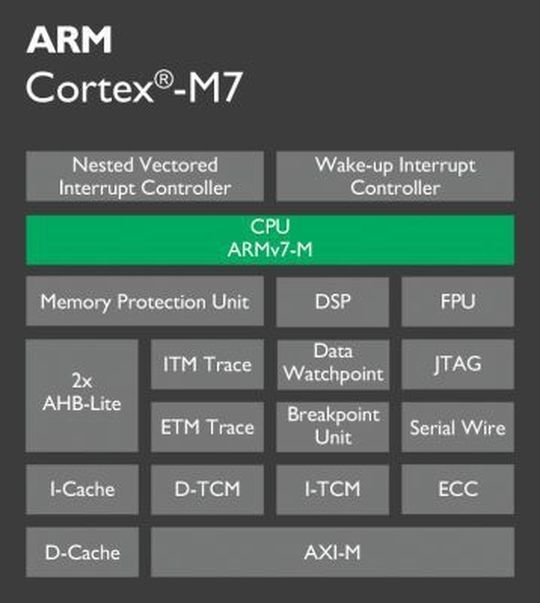
Both ARM and TI have IP or product lines for floating point unit and DSP (like ARM’s Cortex-R and Cortex-M7, and TI’s C200) and floating-point real-time accelerators (CLAs). Imagination’s MIPS-based DSP and FPU solutions are an extension to the processing unit that is present in the core. They have their own dedicated execution pipelines that operate in parallel to the main CPU. This translates to improved performance with minimal area and power overhead. The DSP and FPU execute instructions that are coded for specific and dedicated signal processing instructions like MACs for example.
Hardware is also included in the MIPS processor core that accelerates the execution of these signal processing instructions. MIPS DSP includes SIMD support. MIPS FPU executes both single and double precision floating point operations to provide a greater level of performance and accuracy compared to competitive offerings in a similar class of processor.
With the increasingly powerful MCU performance plus more and more users using the technology, the development tools are also diverse. So, hardware and software toolchains, including compilers, simulators, debuggers and performance analyzers, need to offer support for DSP and FPU as standard.
A diverse market drives technical progress
Companies like ARM and Imagination (MIPS) provide the MCU architectures that are interoperable, open to lots of devices, and easy to be integrated into multiple systems. On the other hand, some companies develop their own MCU architectures, like ColdFire from Freescale, SuperH from Renesas or Blackfin from DI, AVR from Atmel.
This may seem like the market is very diveded or at the least, very limited or closed. But it is neither of those things.
The MCU market is forecast to reach over 30 Billion units by 2020, spanning a wide range of applications and MCU feature requirements.There are several providers of MCU IP and open source options – and this is a good thing for the market as more choices and competition fosters greater technical progress.
* Ian Anderton is Senior Manager of Business Development for MIPS at Imagination Technologies.
(ID:44326060)
:quality(80)/p7i.vogel.de/wcms/ab/73/ab73d241611c109a242a4e5f1b50d01e/0128483827v4.jpeg "Filter elements in various SMD designs. (Bild: TAIYO YUDEN)")
:quality(80)/p7i.vogel.de/wcms/da/e4/dae45caa7f4fa7125e17b07d9da016bb/0125786170v2.jpeg "Soft termination prevents cracks by absorbing mechanical stress through a resin layer. (Bild: TAIYO YUDEN CO., LTD.)")