Choosing the right inductor for a power application may seem simple enough. It’s tempting to think that the nominal inductance and the heat rating current are all that’s needed.
Vishay’s IHLD series: example of a PCB space-saving solution, that combines two inductors in the space of one footprint.
(Figure: Vishay)
Unfortunately, choosing the right inductor for a power application is complicated. Datasheets often, because of many variants and the clarity of the data, don’t tell the full story of an inductor’s characteristics, despite the significant effort made by manufacturers to quantify them. When selecting a power inductor, the engineer will need to determine the most important aspects of its performance — as there is no single device that meets all the requirements of a circuit — and prioritize those that result in optimal circuit operation. This article attempts to demystify inductor properties and to serve as a general guide for choosing the right power inductor.
Determining the Range of Inductances
A good starting point is determining the range of inductances that will work in the circuit of interest. Understanding the range of workable values is crucial since the inductance is rarely constant over the entire operating conditions of the device. For an inductor in a switching application, the allowable ripple current and desired transient response will dictate the required inductance. The general guideline is to keep ripple at 30% or less of the load output current. If an inductor is to be used in a filtering application, its impedance must be high enough to attenuate the target noise frequencies. Design tools and equations are available online to help the engineer choose the proper inductance values. Inductance will often vary due to applied DC current, temperature, or AC drive levels. These factors need to be taken into consideration to keep the inductance within the target range.
The DCR Dissipates Heat and Reduces Efficiency
The direct current resistance (DCR) of a coil dissipates heat and reduces efficiency in the same fashion as all resistors with current flowing through them and a voltage drop across them. It’s essential in determining the wire heating loss. Therefore, it is necessary to choose lower DCR where possible because it can minimize the power loss of the inductor. Sometimes in DC/DC applications DCR is used as a current sense path and the tolerance becomes important.
Misleading Saturation Current for an Inductor
The saturation current rating refers to the amount of DC current the inductor can support before its effective inductance drops by a defined percentage from nominal. The published saturation current for an inductor can be very misleading. The specified percent drop can be set to 20% or 30%, depending on the manufacturer. Datasheets often provide graphs showing the curve of how the inductance changes with respect to DC current. This is a much more useful piece of information because it shows what happens to the inductance for a wide range of load currents, instead of just at a single point listed on the datasheet.
There are two basic magnetic core materials used for power inductors. Ferrite inductors are very common and are characterized by a hard saturation curve. Their high core material permeability creates a sharp inductance drop-off after a certain DC current level, or even after a certain operating temperature. This behavior cannot be predicted from the saturation current rating number alone. Once a ferrite saturates, its inductance plummets and the resulting high ripple currents can cause permanent damage to the circuit. Also common are powdered iron (often called composite or molded) inductors, and they can be a safer option. They have very stable inductance for a wide range of DC bias currents and temperatures, possess a soft saturation behavior, and are often impossible to fully saturate.
Consult the published saturation curves to be sure that the inductance drop due to saturation and temperature does not cause the ripple current to exceed the limits of the circuit.
Heat Rating Current and Efficiency
Power inductor suppliers provide a heat rating current, but like saturation current, it can be misleading. This parameter describes the DC current required to increase the temperature of the inductor by a supplier-specified amount (usually 40 °C). Datasheets assume a specific test setup that allows for a relatively high amount of heat transfer out of the inductor through the terminals. It’s likely that this rating will only serve as an approximation for predicting an inductor’s temperature rise. Passive or active cooling methods, PCB trace width, air flow, and proximity to other components can make the actual inductor temperature quite different than what the heat rating current might imply. Furthermore, for applications with high ripple amplitude, the AC losses generated in the core body and windings will contribute to the temperature rise as well. In practice, if an inductor is running inexplicably hot for a particular load current, the designer may need to verify there is sufficient heat transfer out through the terminals and core body, or that the circuit operation is not causing excessive AC losses in the inductor.
It would be reasonable to assume that a higher heat rating current would correspond to higher efficiency and lower operating temperature, but that’s not always true. While larger inductors typically have lower DC losses and higher efficiency (at the expense of cost and board space), they tend to retain heat better. For two inductors with the same footprint and inductance, the flatter part will have better natural cooling characteristics that could allow it to maintain a 5 to 10 °C lower operating temperature, even when dissipating slightly more heat. Molded inductors have superior cooling characteristics compared to ferrites and provide more efficient heat transfer to the surface of the inductor due to their superior thermal conductivity. While heat rating current can be a useful figure, it lacks AC loss information that may be critical for the proper thermal performance of a design.
Stand: 08.12.2025
Es ist für uns eine Selbstverständlichkeit, dass wir verantwortungsvoll mit Ihren personenbezogenen Daten umgehen. Sofern wir personenbezogene Daten von Ihnen erheben, verarbeiten wir diese unter Beachtung der geltenden Datenschutzvorschriften. Detaillierte Informationen finden Sie in unserer Datenschutzerklärung.
Einwilligung in die Verwendung von Daten zu Werbezwecken
Ich bin damit einverstanden, dass die Vogel Communications Group GmbH & Co. KG, Max-Planckstr. 7-9, 97082 Würzburg einschließlich aller mit ihr im Sinne der §§ 15 ff. AktG verbundenen Unternehmen (im weiteren: Vogel Communications Group) meine E-Mail-Adresse für die Zusendung von redaktionellen Newslettern nutzt. Auflistungen der jeweils zugehörigen Unternehmen können hier abgerufen werden.
Der Newsletterinhalt erstreckt sich dabei auf Produkte und Dienstleistungen aller zuvor genannten Unternehmen, darunter beispielsweise Fachzeitschriften und Fachbücher, Veranstaltungen und Messen sowie veranstaltungsbezogene Produkte und Dienstleistungen, Print- und Digital-Mediaangebote und Services wie weitere (redaktionelle) Newsletter, Gewinnspiele, Lead-Kampagnen, Marktforschung im Online- und Offline-Bereich, fachspezifische Webportale und E-Learning-Angebote. Wenn auch meine persönliche Telefonnummer erhoben wurde, darf diese für die Unterbreitung von Angeboten der vorgenannten Produkte und Dienstleistungen der vorgenannten Unternehmen und Marktforschung genutzt werden.
Meine Einwilligung umfasst zudem die Verarbeitung meiner E-Mail-Adresse und Telefonnummer für den Datenabgleich zu Marketingzwecken mit ausgewählten Werbepartnern wie z.B. LinkedIN, Google und Meta. Hierfür darf die Vogel Communications Group die genannten Daten gehasht an Werbepartner übermitteln, die diese Daten dann nutzen, um feststellen zu können, ob ich ebenfalls Mitglied auf den besagten Werbepartnerportalen bin. Die Vogel Communications Group nutzt diese Funktion zu Zwecken des Retargeting (Upselling, Crossselling und Kundenbindung), der Generierung von sog. Lookalike Audiences zur Neukundengewinnung und als Ausschlussgrundlage für laufende Werbekampagnen. Weitere Informationen kann ich dem Abschnitt „Datenabgleich zu Marketingzwecken“ in der Datenschutzerklärung entnehmen.
Falls ich im Internet auf Portalen der Vogel Communications Group einschließlich deren mit ihr im Sinne der §§ 15 ff. AktG verbundenen Unternehmen geschützte Inhalte abrufe, muss ich mich mit weiteren Daten für den Zugang zu diesen Inhalten registrieren. Im Gegenzug für diesen gebührenlosen Zugang zu redaktionellen Inhalten dürfen meine Daten im Sinne dieser Einwilligung für die hier genannten Zwecke verwendet werden. Dies gilt nicht für den Datenabgleich zu Marketingzwecken.
Recht auf Widerruf
Mir ist bewusst, dass ich diese Einwilligung jederzeit für die Zukunft widerrufen kann. Durch meinen Widerruf wird die Rechtmäßigkeit der aufgrund meiner Einwilligung bis zum Widerruf erfolgten Verarbeitung nicht berührt. Um meinen Widerruf zu erklären, kann ich als eine Möglichkeit das unter https://contact.vogel.de abrufbare Kontaktformular nutzen. Sofern ich einzelne von mir abonnierte Newsletter nicht mehr erhalten möchte, kann ich darüber hinaus auch den am Ende eines Newsletters eingebundenen Abmeldelink anklicken. Weitere Informationen zu meinem Widerrufsrecht und dessen Ausübung sowie zu den Folgen meines Widerrufs finde ich in der Datenschutzerklärung, Abschnitt Redaktionelle Newsletter.
Self-Resonant Frequency and Impedance
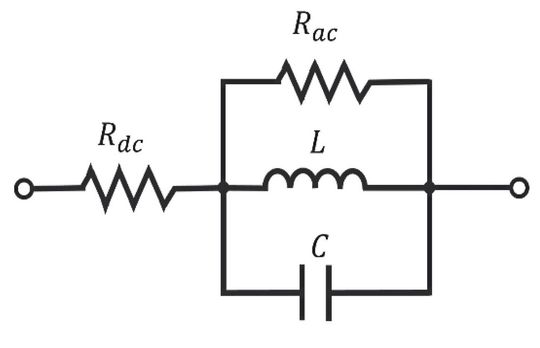
Figure 1: Equivalent circuit model for an inductor.
(Source: Vishay)
Since an ideal inductor is impossible, a basic yet reliable equivalent circuit model for inductors consists of a parallel combination of inductance, capacitance, and AC resistance, all in series with a DC resistance (Figure 1). At the self-resonant frequency (SRF), the inductance and parasitic capacitance form a parallel resonant circuit, at which point the parallel AC resistance (R) becomes the dominant element.
Figure 2: Impedance behavior of the IHLP4040DZER150M11, before and after its SRF.
(Source: Vishay)
The SRF is also the point of highest impedance (Z) for an inductor. After the SRF, the capacitive elements dominate, and the part no longer behaves like an inductor (Figure 2). For a filtering application, using the inductor past the SRF is acceptable as long as impedance is sufficiently dominated by resistance, so that the target frequencies are properly attenuated. However, to avoid destructive current spikes and resonances in energy storage, DC/DC converter applications, the inductor should not be operated above the frequency at which the inductance begins to rise due to SRF.
Electromagnetic Interference and Compatibility
Electronic circuits today are imposed with continually stricter electromagnetic compatibility and interference requirements (EMC and EMI, respectively). Components such as cables, PCB board traces, and other passive or active components conduct or radiate noise into the surrounding environment. The inductor is no exception. If not properly shielded, an inductor’s coil can magnetically couple and induce conducted noise in the PCB traces and nearby components. The coil can even act as a weak antenna, radiating EMI to distant circuitry and external devices. Ferrites are particularly noisy because of the flux fringing at their discrete air gap. By contrast, composite inductors offer considerably better magnetic shielding, not only because the distributed air gaps help to minimize fringing flux, but also because high permeability metal particles completely surround the coil, keeping the magnetic field contained.
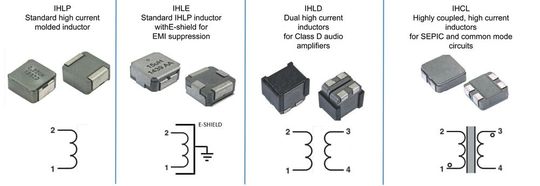
Figure 3: Examples of Vishay’s unique power inductor products.
(Source: Vishay)
For very EMI-sensitive applications, an extra measure of noise suppression may be required. Vishay’s IHLE product line (Figure 3) incorporates a metal E-shield over the standard IHLP product. When soldered to ground, the shield further attenuates unwanted electromagnetic radiation and leakage flux by as much as 21 dB.
Space- and Cost-Saving Inductors
Many innovative solutions exist on the market for different types of magnetic applications. These packages can offer space- and cost-saving benefits, as well as performance improvements, compared to using multiple discrete inductors. As an example of a PCB space-saving solution, Vishay’s IHLD series combines two inductors in the space of one footprint. This design is particularly well-suited for Class D audio amplifiers. The Vishay IHCL also offers two inductors in one package that are highly coupled for use in SEPIC DC/DC converters and common mode applications. Figure 3 showcases these solutions.
Consideration of the Basic Inductor Characteristics
Power inductors are indispensable energy storage components that allow filtering and switching circuits to function properly. The designer must choose the inductor that provides the best performance in the smallest size for an affordable price. This requires careful consideration of the following basic inductor characteristics: Inductance, DCR, saturation, heat rating current, impedance, SRF, efficiency, thermal properties, size, and noise emission, among others. Visit www.vishay.com/inductors for more design tools and information on power inductors.
* Mariya Sachek is Product Marketing Engineer, Vishay Inductors Division.





:quality(80)/p7i.vogel.de/wcms/ce/09/ce09cbfd70dd50b7f8e9e923c4fd8f3d/0129481054v2.jpeg "Im neuen Projekt „CircEL“ erforschen Ingenieure und Juristen gemeinsam Wege zu einer wirklichen Kreislaufwirtschaft. Die Carl-Zeiss-Stiftung fördert das Forschungsprojekt mit drei Millionen Euro für die kommenden sechs Jahre. (Bild: Silvia Wolf / Universität Freiburg)")
:quality(80)/p7i.vogel.de/wcms/59/bf/59bfd2822d711b0ae2cb9383b679f38d/0129302533v2.jpeg "Im Lehrstuhl für KI-Chip Design in der Technischen Universität München (TUM) ist der EU-weit erste KI-Chip mit moderner 7-Nanometer-Technologie entstanden. Im Bild: Lehrstuhlinhaber Prof. Hussam Amrouch. (Bild: Andreas Heddergott / TU Muenchen)")
:quality(80)/p7i.vogel.de/wcms/c1/94/c19403fe0194686b2f4911be7e1e9539/0129294209v2.jpeg "Supraleitung kann verborgene magnetische Ordnungen offenlegen, indem sie gezwungen wird, ihre eigenen Symmetrien zu brechen. (Bild: frei lizenziert)")
:quality(80)/p7i.vogel.de/wcms/ca/81/ca81333a02b8c934dcad5c1745435a3d/0125018126v2.jpeg "Gehäuseschirmung und EMV: Ein umfassender Leitfaden zum Thema gibt der fünfteilige Beitrag. Teil 1 thematisiert Emissionsquellen auf der Leiterplatte. (Bild: Papisut - stock.adobe.com / KI-generiert)")
:quality(80)/p7i.vogel.de/wcms/06/ce/06cece1c695ea91c5108cf7f583feea5/0129540778v2.jpeg "Vernetzte Industrie: Panasonic präsentiert neue Funkmodule und Sensortechnologien auf der diesjährigen Embedded World. (Bild: Panasonic)")
:quality(80)/p7i.vogel.de/wcms/79/33/7933c5529f1bbc132e7935d7c53b6beb/0129501631v2.jpeg "Molekularer Wandel in der Industrie: Das drohende PFAS-Verbot zwingt Hersteller zum Umdenken. Unternehmen wie igus entwickeln bereits Hochleistungskunststoffe, die komplett ohne das Fluorpolymer PTFE auskommen, im Labor aber gleiche tribologischen Eigenschaften beweisen. (Bild: Igus)")
:quality(80)/p7i.vogel.de/wcms/3f/69/3f69e2ac28f7f9ee735680c5e5d53d94/0129470810v2.jpeg "Demo des ChipStack AI Super Agent. (Bild: Cadence)")
:quality(80)/p7i.vogel.de/wcms/7b/57/7b5725dd2e7545ab4904a9b7a3735721/0129309389v2.jpeg "Die embedded world 2026 findet vom 10. bis zum 12. März 2026 statt. (Bild: NürnbergMesse / Thomas Geiger)")
:quality(80)/p7i.vogel.de/wcms/b1/77/b1770e7d7499d7f807a2d5236dc081c8/0129461958v2.jpeg "Dr. Joshua Fryman, Intel Fellow und CTO der Intel Government Technologies (Mitte), stellte zusammen mit Vertretern der Softbank-Tochter Saimemory den ersten Prototypen des neuartigen ZAM-Speichers auf der Intel-Hausmesse Intel Connection 2026 in Japan vor. (Bild: Intel Japan)")
:quality(80)/p7i.vogel.de/wcms/9d/f7/9df7b15f177b8b3ca0e93cf965a476bc/0129529705v2.jpeg "Speicherfehler wie Pufferüberläufe oder Use-After-Free gefährden die Stabilität von Fahrzeugsoftware. Formale Verifizierung hilft dabei, aus getesteter Software nachweislich sichere Systeme zu machen. (Bild: Dall-E / KI-generiert)")
:quality(80)/p7i.vogel.de/wcms/67/3f/673f67f2c8dbef2f0f6a5d01ec1f5ec6/0129505643v2.jpeg "Arduino App Lab: Das aktuelle Release 0.4.0 bringt etliche hilfreiche Neuerungen. (Bild: Arduino)")
:quality(80)/p7i.vogel.de/wcms/1d/e5/1de5e11918cfb261b8b5c4632fc1f7db/0129456364v3.jpeg "An drei Standorten in Litauen entstehen die Speicher. (Bild: Nidec Conversion)")
:quality(80)/p7i.vogel.de/wcms/e8/a8/e8a8a953c77af9bbf208cce6454139d4/0129427931v3.jpeg "Strategisch: EPC lizenziert eGaN-Technologie an Renesas (Bild: frei lizenziert)")
:quality(80)/p7i.vogel.de/wcms/61/85/6185c7a5619aba866e3b237690bea839/0129334467v3.jpeg "So soll die Fabrik im polnischen Wałbrzych aussehen. (Bild: Sungrow Power Supply Co., Ltd.)")
:quality(80)/p7i.vogel.de/wcms/c7/f6/c7f61d0437c7f8fca3c6ff947ba2ad62/0129322490v2.jpeg "AMD hat die zweite Generation der Kintex UltraScale+ Gen 2 FPGA-Familie vorgestellt, die mit PCIe Gen4 den 4K-AV-over-IP-Betrieb für 4K/8K-Medienanwendungen unterstützt. (Bild: AMD)")
:quality(80)/p7i.vogel.de/wcms/66/0c/660c31afa35398bac9be42f2be73fdc4/0129073529v2.jpeg "FPGAs lösen Performance-Engpässe, gelten aber in der Programmierung als schwer zugänglich. Die universelle Programmiersprache Livt soll die Hürde senken – korrekt, deterministisch und HDL-kompatibel. (Bild: Toby Giessen / VCG)")
:quality(80)/p7i.vogel.de/wcms/9c/35/9c35ed04fa562b190cbc496a695a6802/0128823288v1.jpeg "Optimiert auf Skalierung oder Geschwindigkeit: Die SGET hat den offenen Standard oHFM für FPGA-Module in zwei Varianten vorgestellt. (Bild: SGET (Screencast / Screenshot))")
:quality(80)/p7i.vogel.de/wcms/d7/e6/d7e6fe4124ec2efc726e9c3f2c2a4cfc/0128241940v2.jpeg "(Bild: frei lizenziert)")
:quality(80)/p7i.vogel.de/wcms/8f/bf/8fbf2cfa5f7238e41e046b12e936212b/0129541806v3.jpeg "Der Pistenbully 600 E+ ist eine hybride Pistenraupe, die nicht an die Steckdose muss. (Bild: Kässbohrer Geländefahrzeug AG)")
:quality(80)/p7i.vogel.de/wcms/fc/4f/fc4f36089dac773f0b9483eb39a726a1/0129508876v2.jpeg "Microsoft-Deutschlangzentrale in München: Im Rahmen der Münchner Sicherheitskonferenz haben 15 internationale Unternehmen entlang der gesamten Elektronik-Wertschöpfungskette unter Federführung von Microsoft und Ericsson eine Tech Allianz für digitale Souveränität und gemeinsame Vertrauensstarndards gebildet. (Bild: Microsoft)")
:quality(80)/p7i.vogel.de/wcms/bc/42/bc42dd0a04818f6195a7f78bcec88be6/0129484567v2.jpeg "Der oberirdische Teil des IceCube-Experiments und die grafische Simulation eines Messsignals der Detektoren im Eis. Die Forscher können mit dem IceCube-Observatorium kosmische Neutrinos messen. (Bild: Stephan Richter, IceCube; Fotomontage: Beatrix von Puttkamer)")
:quality(80)/p7i.vogel.de/wcms/14/63/14635e09eff181f7ab7a0f81ffa0daa3/0129407664v2.jpeg "Dank eines neuartigen Sensors lässt sich Wasserstoff auch in feuchten Umgebungen zuverlässig detektieren. (Bild: frei lizenziert)")
:quality(80)/p7i.vogel.de/wcms/ff/e4/ffe44f0dcf0fc0323926b1bc0a60d94f/0129386849v2.jpeg "Strukturwandel der API: Die Firma Phytec Messtechnik ist von einem traditionellen Testaufbau zu einer Architektur mit Web-Service-API gewechselt. (Bild: Göpel electronic)")
:quality(80)/p7i.vogel.de/wcms/a7/8c/a78c5f851db209abb1540909918fbf4a/0129260768v2.jpeg "Eine KI-basierte Code-Vervollständig ist in der LabVIEW+-Suite von Emerson möglich. Der Projektkontext wird analysiert und passende Programmierschritte vorgeschlagen. (Bild: Emerson)")
:quality(80)/p7i.vogel.de/wcms/38/1d/381de324bbe6d190a95169372a8ca02b/0129540692v2.jpeg "Komponenten von Infineon ermöglichen eine schnelle Datenverarbeitung und -Kommunikation sowie ein effizientes Energiemanagement in BMW's Neuer Klasse. (Bild: BMW)")
:quality(80)/p7i.vogel.de/wcms/87/4e/874eb8316b30d4b79793576f26c7dc62/0129542275v2.jpeg "10G TSN-Endpoint: Neuer IP-Core für Echtzeit-Ethernet bis 10 Gbit/s. (Bild: Fraunhofer IPMS)")
:quality(80)/p7i.vogel.de/wcms/62/1c/621cb1390951d6ac4029cd471edf956d/0129543495v2.jpeg "DBK EMS ist in Rülzheim beheimatet und sieht sich nicht als simpler Dienstleister, sondern als Mitdenker. (Bild: niko design / DBK)")
:quality(80)/p7i.vogel.de/wcms/2c/60/2c60940d2ebd2d45765085bc69488764/0129530286v2.jpeg "Der chinesische Chiphersteller Nexperia, der in Nimwegen den europäischen Standort hat, wurde vom Gericht in Amsterdam dazu verdonnert, weiterhin kontrolliert zu werden. Das schmeckt Peking nicht. Das Dumme: Die Chips sind für Europas Autohersteller bekanntlich sehr wichtig ... (Bild: Nexperia)")
:quality(80)/p7i.vogel.de/wcms/a6/a8/a6a880c57faa551baeca28d4178de438/0129419457v2.jpeg "China investiert stark in das heimische Halbleiter-Ökosystem. Wer daran teilhaben will, sollte vorher wissen, wo sich welcher Cluster befindet und welche Technologie er vorantreibt. (Bild: Dall-E / KI-generiert)")
:quality(80)/p7i.vogel.de/wcms/69/1f/691f39ba12be3cad90eb88bdabc456a6/0127321404v2.jpeg "Das Kreativteam Christian Göller, GreatScott! und Christopher Becht (v. l. n. r.): erfolgreiches Creator-Marketing im B2B-Sektor (Bild: Würth Elektronik)")
:quality(80)/p7i.vogel.de/wcms/6a/cc/6acc4f803241cfe5b6d60560c0a2b4d9/0126684948v2.jpeg "In der Altersgruppe 25 bis 64 verfügen 34 Prozent der Deutschen über einen tertiären Abschluss im MINT-Bereich. (Bild: Dall-E / KI-generiert)")
:quality(80)/p7i.vogel.de/wcms/ef/aa/efaae5a25fb0a4c55c434611033447af/0126532350v2.jpeg "Die jährliche Back-to-School-Aktion von Digikey mit Preisen für Studierende ist gestartet. (Bild: Digikey)")
:fill(fff,0)/images.vogel.de/vogelonline/companyimg/130400/130457/65.jpg "mev_logo-RGB-L.jpg ()")


:quality(80)/p7i.vogel.de/wcms/da/e4/dae45caa7f4fa7125e17b07d9da016bb/0125786170v2.jpeg "Soft termination prevents cracks by absorbing mechanical stress through a resin layer. (Bild: TAIYO YUDEN CO., LTD.)")
:quality(80)/p7i.vogel.de/wcms/3f/45/3f45b76aef06121a2016dd70cbecd5f3/0127037255v2.jpeg "Piezoelectric actuators turn flat car displays into responsive surfaces, providing tactile and acoustic feedback for safer, more intuitive interaction. (Bild: TAIYO YUDEN CO., LTD.)")