The DC-link capacitor has a key role to play in several application sectors that are rapidly evolving such as electrically-propelled vehicles and renewable energy. However, as designers seek ever greater performance and reliability, DC-Link capacitors must work in increasingly challenging environments.
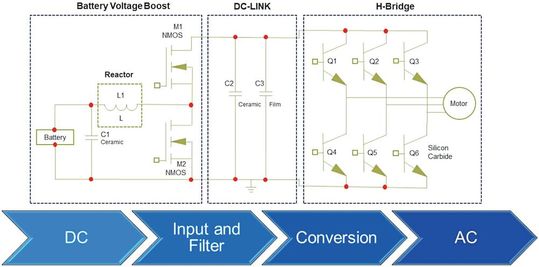
Figure 2: The DC-Link capacitor is an essential element of electric vehicle motor drive systems.
(Source: Kemet)
According to a Precedence Research report covering the electric vehicle market, the global electric vehicle market is expected to reach a compound annual growth rate (CAGR) of 40.7% from 2020 to 2027. As a result of this market expansion, the demand for high-performance, rugged DC-Link capacitors that are suited to automotive use will increase at a similar level.
This article, will look at where DC-Link capacitors are commonly used and examine the critical considerations for choosing the correct device for an application.
DC-Link capacitors – an overview
DC-Link capacitors are an essential element within power conversion systems, especially in modern applications such as electrically-propelled vehicles where they are used in inverters that drive the motors and onboard chargers (OBC). Other applications include renewable energy systems, including photovoltaic and wind power inverters and industrial motor drives. Acting as a charge reservoir to smooth out the ripples inevitably introduced by switching power conversion solutions, DC-Link capacitors play a vital role in enhancing energy density and reducing ripple and noise.
However, components for use in power systems increasingly have to contend with harsh environments. In almost every application, space is at a premium meaning that designs are compact and, therefore, cooling is more challenging, leading to higher temperatures. Additionally, the advent of wide-bandgap semiconductors (SiC & GaN) allows designers to operate power conversion designs at higher temperatures, reducing active cooling needs and increasing efficiency – albeit by exposing components to additional thermal stress.
The automotive arena is particularly challenging as long-term vibration is an additional challenge while the vehicle is in motion alongside the thermal challenges and extreme space and weight constraints. With battery voltages increasing to reduce losses and extend range, the voltage across the DC-Link capacitor increases, putting a greater strain on the dielectric material.
Strong and rapidly increasing demand for electric vehicles, and within the renewable sector, requires high-performance components that are compact, lightweight, and have high dielectric capacitance coupled with high heat resistance for extended operational profiles. Additionally, capacitors used in converter and motor drive inverters require greater assurance of high-temperature performance than ever before, further adding to the challenges designers face in these demanding sectors.
Selecting a DC-Link capacitor
Within electrically propelled vehicles, one or more traction inverters is/are required to convert the high-voltage DC battery voltage into a three-phase drive for the electric traction motor(s). The DC-Link capacitor is an essential element of this system, ensuring a smooth and stable DC voltage on the DC-bus.
The sole role of the DC-Link capacitor is to balance the fluctuating instantaneous power on the DC-bus created by switching activity within the battery controller (stage 1) and especially reflected ripple and noise from the high-frequency power switching devices within the three-phase drive (stage 3). To achieve this, it acts as a charge reservoir to buffer the sporadic demands for heavy current from the inverter in stage 3.
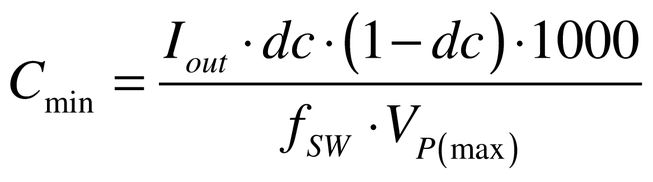
This formula gives the minimum capacitance needed to achieve a states ripple voltage:
It is possible to use different technologies such as aluminum electrolytic, film, or ceramic type devices for the DC-Link capacitor with the (sometimes difficult) choice depending upon the application it is to be used in.
The first step in choosing a DC-Link capacitor is to consider the voltage ratings and nominal capacitance values of potentially suitable devices, ensuring high ripple current ratings. All DC-Link capacitors are required to regulate voltage and absorb the ripples that occur in the current waveform. As designs move to faster switching MOSFETs and IGBTs, the increasingly fast ripple affects performance as every ‘real’ capacitor contains some impedance and self-inductance. As the operating frequency of the inverter increases, some capacitor technologies are precluded – such as not using film capacitors above 1MHz.
Stand: 08.12.2025
Es ist für uns eine Selbstverständlichkeit, dass wir verantwortungsvoll mit Ihren personenbezogenen Daten umgehen. Sofern wir personenbezogene Daten von Ihnen erheben, verarbeiten wir diese unter Beachtung der geltenden Datenschutzvorschriften. Detaillierte Informationen finden Sie in unserer Datenschutzerklärung.
Einwilligung in die Verwendung von Daten zu Werbezwecken
Ich bin damit einverstanden, dass die Vogel Communications Group GmbH & Co. KG, Max-Planckstr. 7-9, 97082 Würzburg einschließlich aller mit ihr im Sinne der §§ 15 ff. AktG verbundenen Unternehmen (im weiteren: Vogel Communications Group) meine E-Mail-Adresse für die Zusendung von redaktionellen Newslettern nutzt. Auflistungen der jeweils zugehörigen Unternehmen können hier abgerufen werden.
Der Newsletterinhalt erstreckt sich dabei auf Produkte und Dienstleistungen aller zuvor genannten Unternehmen, darunter beispielsweise Fachzeitschriften und Fachbücher, Veranstaltungen und Messen sowie veranstaltungsbezogene Produkte und Dienstleistungen, Print- und Digital-Mediaangebote und Services wie weitere (redaktionelle) Newsletter, Gewinnspiele, Lead-Kampagnen, Marktforschung im Online- und Offline-Bereich, fachspezifische Webportale und E-Learning-Angebote. Wenn auch meine persönliche Telefonnummer erhoben wurde, darf diese für die Unterbreitung von Angeboten der vorgenannten Produkte und Dienstleistungen der vorgenannten Unternehmen und Marktforschung genutzt werden.
Meine Einwilligung umfasst zudem die Verarbeitung meiner E-Mail-Adresse und Telefonnummer für den Datenabgleich zu Marketingzwecken mit ausgewählten Werbepartnern wie z.B. LinkedIN, Google und Meta. Hierfür darf die Vogel Communications Group die genannten Daten gehasht an Werbepartner übermitteln, die diese Daten dann nutzen, um feststellen zu können, ob ich ebenfalls Mitglied auf den besagten Werbepartnerportalen bin. Die Vogel Communications Group nutzt diese Funktion zu Zwecken des Retargeting (Upselling, Crossselling und Kundenbindung), der Generierung von sog. Lookalike Audiences zur Neukundengewinnung und als Ausschlussgrundlage für laufende Werbekampagnen. Weitere Informationen kann ich dem Abschnitt „Datenabgleich zu Marketingzwecken“ in der Datenschutzerklärung entnehmen.
Falls ich im Internet auf Portalen der Vogel Communications Group einschließlich deren mit ihr im Sinne der §§ 15 ff. AktG verbundenen Unternehmen geschützte Inhalte abrufe, muss ich mich mit weiteren Daten für den Zugang zu diesen Inhalten registrieren. Im Gegenzug für diesen gebührenlosen Zugang zu redaktionellen Inhalten dürfen meine Daten im Sinne dieser Einwilligung für die hier genannten Zwecke verwendet werden. Dies gilt nicht für den Datenabgleich zu Marketingzwecken.
Recht auf Widerruf
Mir ist bewusst, dass ich diese Einwilligung jederzeit für die Zukunft widerrufen kann. Durch meinen Widerruf wird die Rechtmäßigkeit der aufgrund meiner Einwilligung bis zum Widerruf erfolgten Verarbeitung nicht berührt. Um meinen Widerruf zu erklären, kann ich als eine Möglichkeit das unter https://contact.vogel.de abrufbare Kontaktformular nutzen. Sofern ich einzelne von mir abonnierte Newsletter nicht mehr erhalten möchte, kann ich darüber hinaus auch den am Ende eines Newsletters eingebundenen Abmeldelink anklicken. Weitere Informationen zu meinem Widerrufsrecht und dessen Ausübung sowie zu den Folgen meines Widerrufs finde ich in der Datenschutzerklärung, Abschnitt Redaktionelle Newsletter.
Fully understanding the application is crucial when selecting DC-Link capacitors. As well as the DC bus voltage and operating frequency, designers must take the anticipated lifetime of the application into account and understanding the maximum possible ripple current and whether it is steady-state or variable.
Ideally, the capacitor selected for a DC-Link application will have low values of self-inductance as well as low Equivalent Series Resistance (ESR) and high ripple current tolerance. The operating frequencies and operating temperature need to be compatible with the application. In general, film capacitors can cope with high ripple current and offer a longer operational life while offering substantially higher values than ceramic types.
Meeting the challenge
Meeting all the parametric needs for a DC-Link capacitor will be challenging, requiring designers to review many candidates before finding the optimum device.
One device that is a strong contender is Kemet’s new high temperature, power film DC-Link capacitor. Denoted the C4AK series, it is specifically designed for continuous operation in rugged applications with elevated temperature profiles – such as those found in automotive applications.
C4AK devices offer a range of capacitance values from 1.5 to 60µF and are rated for DC voltages up to 900V, making them suited to a wide range of EV powertrain uses. Even in harsh environmental conditions, they achieve a lifetime of 4,000 hours at 125°C and 1,000 hours at 135°C, ensuring the long-term reliability of vehicles. The devices have been tested to the automotive AEC-Q200 standard, providing further reassurance to designers of their suitability.
A real-world example that has a current of 12A, operating voltage of 700V, switching frequency of 10kHz, and requires a DC-Link capacitor of 20µF. The application profile requires an operating temperature of 50°C for two-thirds of the time and 100°C for the remainder.
Kemet’s new C4AKOBW5200A3LJ DC-Link capacitor achieves this application profile easily, handling both the current and voltage while delivering a predicted lifetime of 66,400 hours.
Conclusion
DC-Link capacitors are essential for many modern systems including electric vehicles, renewable energy, and industrial applications. However, market pressure is forcing designers to deliver ever more compact solutions which require high-performance components that can cope with elevated temperatures and the need to operate over long lifetimes.
Kemet’s new C4AK series addresses many of the challenges experienced in selecting a DC-Link capacitor for automotive applications. It combines long-term reliability with 900V operation at ambient temperatures as high as 135°C, making it ideal for demanding automotive applications.
* Matteo Taglioli is Business Line Manager, Automotive Film Capacitors at KemetCorporation, a Yageo Group Company.





:quality(80)/p7i.vogel.de/wcms/68/46/684697b6eb687384e0d8c6803450401a/0130056395v2.jpeg "Das TUM RoboGym (powered by Neura) in der Planungsphase (Grafik). Die TU München und das Robotik Startup Neura Robotics planen, gemeinsam am Campus der TU München das weltgrößte Robotik-Trainingszentrum einzurichten. (Bild: Neura Robotics)")
:quality(80)/p7i.vogel.de/wcms/0f/c0/0fc0d93c99a5d9066e58c39f41fb1b10/0130046764v2.jpeg "Sicherheit im Schienenverkehr: Dank 5G-Funkverbindung wird eine stabile Übertragung unter schwankenden Netzbedingungen garantiert. (Bild: Smart Rail Connectivity Campus (SRCC))")
:quality(80)/p7i.vogel.de/wcms/40/eb/40ebe1b2905b863da8111cd0364ffcf1/0130027046v2.jpeg "Das belgische Forschingsinstitut hat ein europäisches Universitätskonsortium zum Thema CMOS 2.0 eins Leben gerufen. In ihm werden 26 Universitätsgruppen vereint, um Chiptechnologien zu erforschen, die über herkömmliche Transistorskalierungen hinausgehen. (Bild: Imec)")
:quality(80)/p7i.vogel.de/wcms/c0/92/c09252ae405f3d1fe4d606cfdef9376a/0130108881v2.jpeg "Jensen Huang, CEO von Nvidia (links) und Tae-won Chey, Chairman der SK Group (rechts) gemeinsam auf dem Nvidia-Event GTC 2026. (Bild: SK Group)")
:quality(80)/p7i.vogel.de/wcms/7d/76/7d76791a2abb881ce86b1fac7d081210/0130106077v2.jpeg "Ein Intel 4004 aus dem Jahr 1971:
Der im SGT-PMOS-Prozess gefertigte Chip hatte 2.300 Transistoren und war ursprünglich eine Auftragsarbeit für einen japanischen Tischrechner. (Bild: Intel)")
:quality(80)/p7i.vogel.de/wcms/9e/18/9e1862cf28b49e0623f973ca3f4ea4f2/0130102468v2.jpeg "Auf die Mischung kommt es an:
Metalldetektierbare Kabelbinder oder Teile davon lassen sich leicht im Herstellungsprozess identifizieren. (Bild: Panduit)")
:quality(80)/p7i.vogel.de/wcms/42/74/42747cd229a035fc573b62ca9a8985b6/0130029398v2.jpeg "Der Einsatz von KI ist bereits weit in der globalen Halbleiterindustrie verbreitet. Allerdings in einem sehr fragmentierten und unausgewogenem Ausmaß. (Bild: HTEC)")
:quality(80)/p7i.vogel.de/wcms/7b/57/7b5725dd2e7545ab4904a9b7a3735721/0129309389v2.jpeg "Die embedded world 2026 findet vom 10. bis zum 12. März 2026 statt. (Bild: NürnbergMesse / Thomas Geiger)")
:quality(80)/p7i.vogel.de/wcms/cc/13/cc1378375499a26b5ddbb309d2155acb/0130085649v2.jpeg "Vom Hardware-Produzenten zum Software-Anbieter: Neocortec lizenziert seinen NeoMesh-Protokoll-Stack zunehmend direkt an OEMs und Dritthersteller, anstatt ausschließlich auf den Verkauf eigener Funkmodule zu setzen. (Bild: mc/VCG)")
:quality(80)/p7i.vogel.de/wcms/24/58/2458f1cae3100e375fbb8124f02c54af/0130111244v3.jpeg "Stromsparer für das IoT: Der Npzero-Baustein übernimmt die Sensorüberwachung und schickt den Hauptprozessor in den Tiefschlaf. (Bild: Manuel Christa)")
:quality(80)/p7i.vogel.de/wcms/60/47/6047be6b1545fd0522c738a3b32ba396/0130106402v2.jpeg "Detailaufnahme des Evaluation-Kits für den neuen SYN765x-Chip. Dieses Entwickler-Board ist das Herzstück der Smart-Home-Demonstration rund um die intelligente Mikrowelle. Ausgestattet mit einem aufgesetzten Ampak-Funkmodul samt Antenne, USB-C-Ports und weiteren Entwickler-Schnittstellen, übernimmt die Platine autark KI-Sensorik-Aufgaben sowie die Steuerung als IoT-Hub für Standards wie Wifi 7, Thread und Matter. (Bild: mc/VCG)")
:quality(80)/p7i.vogel.de/wcms/d2/cd/d2cd33084ab732ff8a600bc55ade1f47/0130096831v1.jpeg "Die WE-MPSB-Familie. (Bild: Würth Elektronik eiSos)")
:quality(80)/p7i.vogel.de/wcms/3a/79/3a79504e38945985e7369fd2b971a8b9/0129690250v2.jpeg "Die Solid-State-Batterie wurde 2026 auf der CES in Las Vegas vorgestellt. (Bild: Donut Lab)")
:quality(80)/p7i.vogel.de/wcms/b4/9f/b49fe35971f6c2cfe4389ec90124c089/0129954153v2.jpeg "Ligna Energy möchte die Designdisziplin von Smartcards auf Gebäudesensoren anwenden. (Bild: Ligna Energy)")
:quality(80)/p7i.vogel.de/wcms/10/45/1045969e69a1db4aaa73d0f74f55cc02/0129962687v2.jpeg "Bosch Rexroth und AMD arbeiten gemeinsam an Software-Defined Automation: ctrlX OS unterstützt nun auch auf AMD Embedded x86-CPUs und adaptive SoCs und verspricht so noch größere Hardware-DesignFlexibilität, nahtlose Skalierbarkeit und eine sichere, modulare Betriebssystem-Grundlage. (Bild: Bosch Rexroth AG)")
:quality(80)/p7i.vogel.de/wcms/cd/32/cd3243e4a9a6476265ef6ea9463dfbd8/0129852659v2.jpeg "Die PIC64-Serie an Multicore-Mikroprozessoren setzt auf RISC-V-Kerne und eignen sich speziell für Anwendungen mit asynchronem Multipricessing (AMP) in intelligenten Embedded-Edge-Anwendungen. (Bild: Microchip)")
:quality(80)/p7i.vogel.de/wcms/c7/f6/c7f61d0437c7f8fca3c6ff947ba2ad62/0129322490v2.jpeg "AMD hat die zweite Generation der Kintex UltraScale+ Gen 2 FPGA-Familie vorgestellt, die mit PCIe Gen4 den 4K-AV-over-IP-Betrieb für 4K/8K-Medienanwendungen unterstützt. (Bild: AMD)")
:quality(80)/p7i.vogel.de/wcms/66/0c/660c31afa35398bac9be42f2be73fdc4/0129073529v2.jpeg "FPGAs lösen Performance-Engpässe, gelten aber in der Programmierung als schwer zugänglich. Die universelle Programmiersprache Livt soll die Hürde senken – korrekt, deterministisch und HDL-kompatibel. (Bild: Toby Giessen / VCG)")
:quality(80)/p7i.vogel.de/wcms/65/d3/65d32f7e29fc034618475a64fb0c37b0/0123498946v2.jpeg "Reichen Sie Ihren Vortrag für den ESE Kongress ein. Jahr für Jahr trifft treffen sich über 1000 Teilnehmer aus der Embedded-Software-Community in Sindelfingen zu Deutschlands größtem Fachkongress rund um das Thema Software Engineering. (Bild: Nicolas Det)")
:quality(80)/p7i.vogel.de/wcms/e7/d3/e7d392dc5c83b313ce489d4c6af4648d/0130050208v2.jpeg "Der Heracles-Chip von Intel berechnet vollständig verschlüsselte Daten, ohne sie zu entschlüsseln. Nach Unternehmensangaben ist der Chip bei FHE-Rechenoperationen (Fully Homomorphic Encryption) 1.074- bis 1.547-fach schneller als ein Intel Xeon mit 24 Kernen. (Bild: Intel)")
:quality(80)/p7i.vogel.de/wcms/74/96/74964a7715c738a9e8b17681445ceed3/0130103633v2.jpeg "Zusammen mit dem Vektor-Netzwerkanalysator PNA/PNA-X kann der Lightwave Component Analyzer N4378A von Keysight optische Transceiver-Komponenten mit 1,6 T und darüber hinaus charakterisieren. (Bild: Keysight)")
:quality(80)/p7i.vogel.de/wcms/0d/18/0d183ecb569b03285578762658d2def6/0130061201v2.jpeg "Rahman Jamal war 30 Jahre bei National Instruments und damit ein Teil der Messtechnik-Branche. Den VIP-Anwenderkongress hat er mit aus der Taufe gehoben. (Bild: ELEKTRONIKPRAXIS/privat)")
:quality(80)/p7i.vogel.de/wcms/72/19/7219e53d462877119eaf0bd98783a46d/0129953146v2.jpeg "Das GCAR 6283 unterstützt bei Test, Simulation und Analyse moderner Steuergeräte. (Bild: Göpel electronic)")
:quality(80)/p7i.vogel.de/wcms/aa/0a/aa0ac25ad5bfedac92cee283b06a75b1/0129968415v2.jpeg "USRP X420 von Emerson NI ist eine softwarebasierte Funkplattform. (Bild: Emerson NI)")
:quality(80)/p7i.vogel.de/wcms/6a/93/6a93991941467231d8798c8577882dfd/0130071573v2.jpeg "(Bild: Vision & Control GmbH)")
:quality(80)/p7i.vogel.de/wcms/d3/76/d3760874d137b2f4bae5954b46dd5900/0130101582v3.jpeg "Hardware hautnah: Ein Development-Board mit dem neuen SoC nRF54LM20, der dank integrierter NPU speziell für extrem stromsparende Edge-KI-Anwendungen entwickelt wurde. (Bild: mc/VCG)")
:quality(80)/p7i.vogel.de/wcms/85/ef/85ef671dd893a9f44f94cfffada66de3/0130027270v3.jpeg "Samir Sharma, Assistant Vice President der Mediatek IoT Business Group, zeigt auf der Pressekonferenz auf der Embedded World 2026 einen neuen Genio-Pro-Chip. (Bild: mc/VCG)")
:quality(80)/p7i.vogel.de/wcms/2f/d1/2fd1a1e60cea15b09ba0289aae5f781b/0130053098v2.jpeg "Hydropmeter mit App: Das Lesegerät ist in weniger als zwei Minuten installiert. Dann hat man seinen Wasserverbrauch jederzeit im Blick und wird bei Wasserschäden sofort gewarnt. (Bild: Hydrop Systems)")
:quality(80)/p7i.vogel.de/wcms/2b/78/2b7840e1e29d2649c24f62308ada4c63/0129857003v2.jpeg "KI treibt das Wachstum auf dem Halbleitermarkt auch im Jahr 2026 an. (Bild: Dall-E / KI-generiert)")
:quality(80)/p7i.vogel.de/wcms/e1/b3/e1b37ac274ffdd28bf5b7788f04fedc9/0129957428v2.jpeg "Geht es nach der chinesischen Regierung, dann gehören inländische Rechenzentren voller Nvidia-Hardware der Vergangenheit an. (Bild: Nvidia)")
:quality(80)/p7i.vogel.de/wcms/e5/6c/e56ceb935ba09cb66a4fd0f961b2d3e9/0129642888v2.jpeg "(Bild: Vogel Professional Education)")
:quality(80)/p7i.vogel.de/wcms/69/1f/691f39ba12be3cad90eb88bdabc456a6/0127321404v2.jpeg "Das Kreativteam Christian Göller, GreatScott! und Christopher Becht (v. l. n. r.): erfolgreiches Creator-Marketing im B2B-Sektor (Bild: Würth Elektronik)")
:quality(80)/p7i.vogel.de/wcms/6a/cc/6acc4f803241cfe5b6d60560c0a2b4d9/0126684948v2.jpeg "In der Altersgruppe 25 bis 64 verfügen 34 Prozent der Deutschen über einen tertiären Abschluss im MINT-Bereich. (Bild: Dall-E / KI-generiert)")
:fill(fff,0)/images.vogel.de/vogelonline/companyimg/130400/130457/65.jpg "mev_logo-RGB-L.jpg ()")
:quality(80)/p7i.vogel.de/wcms/da/e4/dae45caa7f4fa7125e17b07d9da016bb/0125786170v2.jpeg "Soft termination prevents cracks by absorbing mechanical stress through a resin layer. (Bild: TAIYO YUDEN CO., LTD.)")
:quality(80)/p7i.vogel.de/wcms/ab/73/ab73d241611c109a242a4e5f1b50d01e/0128483827v4.jpeg "Filter elements in various SMD designs. (Bild: TAIYO YUDEN)")